
The Winchcombe War Memorial was unveiled on August 4 1920, and every November there has been a ceremony to remember local men who died.
Over the years their names and stories have been forgotten - leaving only surnames and initials Research over recent years has re-discovered their names, and some of their stories, and the names and stories of other local men, whom we will remember on the anniversary of their deaths.
To the glorious memory of the men from the parishes of Winchcombe & Sudeley who fell in the great war. There is more detail in the museum - if you would like more information, please get in touch.

Edward Brown was posted to Winchcombe with his battalion for more training, after their return from Dunkirk early in 1941. He was fondly remembered by a boy in the Boys’ Home, in part of the former workhouse where soldiers were also based, as he led collections to give the boys a party. He was killed when a faulty mortar exploded as he was supervising live practice on January 5 1942, and was buried in Winchcombe Cemetery.
Edward Brown was the son of a doctor, who had been invalided home from Gallipoli in 1915, and taken a light post as Medical Officer of Health at Newton Abbott, in Devon and died in 1937.
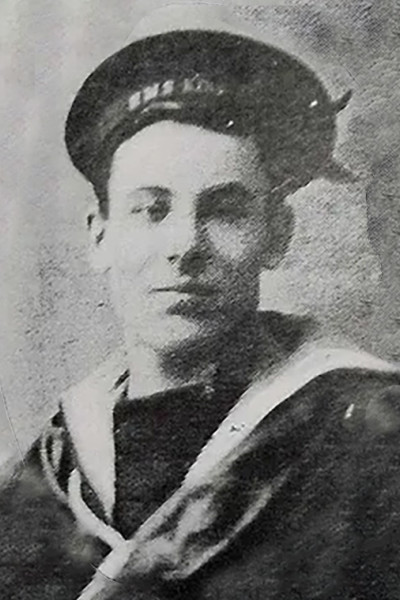
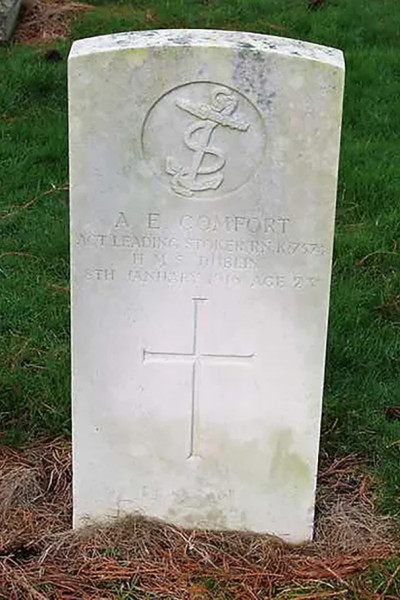
Arthur Comfort was one of the very few local men who volunteered for the Navy and joined in 1910. He was posted to HMS King Alfred at Torquay, and then to the Dublin, which saw action at Gallipoli in 1915., and suffered damage. He was promoted to Acting Leading Stoker in July 1915, and was with the ship in Belfast for repairs when he died of pneumonia on January 8, 1916.His body was returned to Winchcombe, and buried after a military funeral in Winchcombe Cemetery.
Arthur Comfort was the oldest son of the potter Elijah Comfort, and born in Cheltenham in 1892, before Elijah moved to Winchcombe. There he became an important potter both before and after the war.
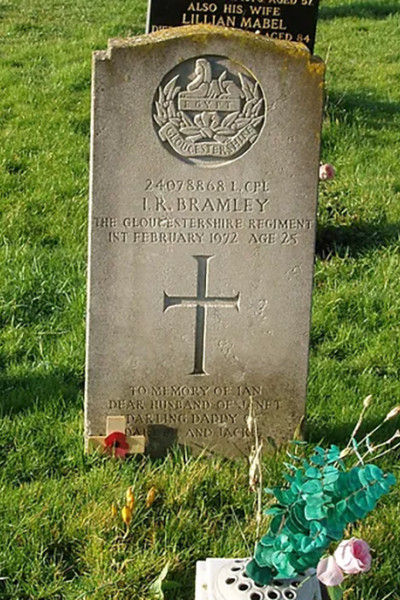
Ian Bramley’s grave in Winchcombe Cemetery
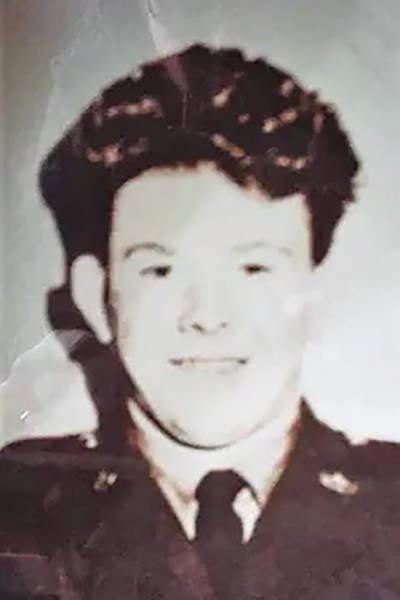
Ian Bramley was serving with the army in North Ireland and was killed by an IRA gunman as he manned a barricade at the corner of Hastings street and the Falls Road, on February 1, 1972, a day on which there were a number of gun battles in the area.
Ian Bramley was a young married man with two children, with many friends in Winchcombe. He was brought back for a full military funeral at St Peter’s and buried in Winchcombe Cemetery
Ian Bramley’s grave in Winchcombe Cemetery
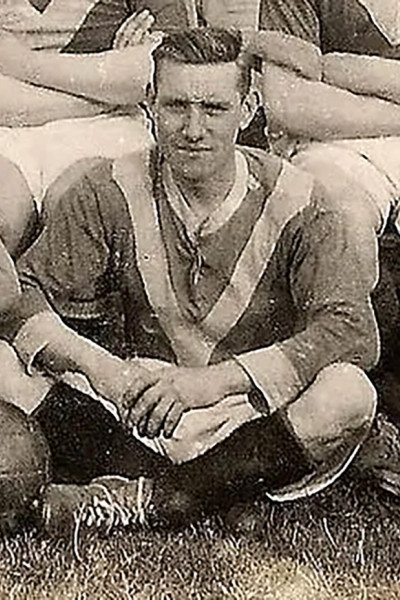
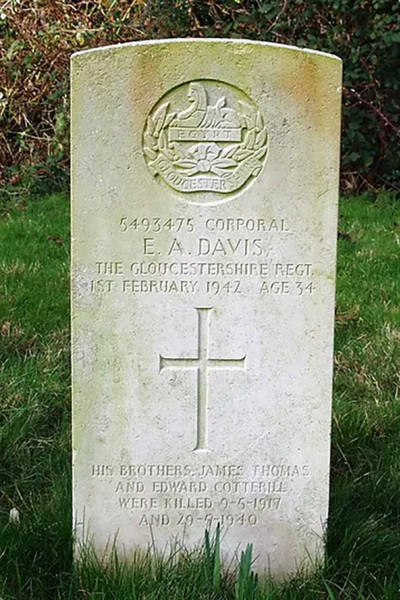
Ernest Davis grave also commemorating both his brothers
Ernest Davis joined the Gloucesters in June 1939, and left as part of the British Expeditionary Force in May 1940. During the retreat to Dunkirk., then 5th Gloucesters were ordered to make at stand against the Germans at Ledringhem, in an area where the German army and the SS were very active, to give others a better chance to make it to the coast. After two days, with Germans in the village they were ordered to head for the coast leaving their wounded behind. Ernest Davis made it to Dunkirk and was picked up, only for his boat to be sunk . He was picked up a second time from the sea, but became ill and never recovered. He was discharged from the army and died in Over Hospital on February1, 1942. He was buried in Gretton churchyard.
Ernest’s family had moved to Gretton from Birmingham. One brother had died in World War I and another had died at Dunkirk. He married Mary Edmonds in Gretton on New Years Day 1938 and had two sons. He then worked at a local garage.
Ernest Davis grave, commemorating also both his brothers.
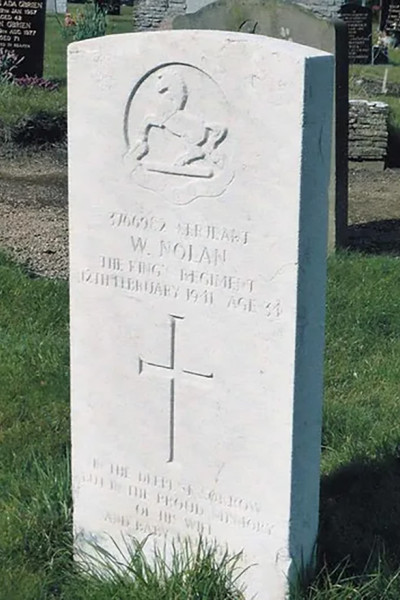
William Nolan’s grave in Winchcombe Cemetery
Many of the King’s Regiment were based in England at this time, to guard against possible German invasion, and sent to train in Winchcombe, Sgt Nolan was leading a night time exercise with other men on February 11, at a time rife with rumours of 5th columnists. They encountered another group, unsure of each other’s identities, and in the scuffle between the two groups. Sgt Nolan was stabbed in the stomach by a bayonet. He was taken to Winchcombe Hospital and treated, but died the next day. Local inquests were held.He and the man suspected of causing his death were censured allowing fixed bayonets. Sgt Nolan died on February 12, 1941. He was buried in Winchcombe Cemetery after a Requiem Mass at St Nicholas Church.
Sgt Nolan came from Dublin. He was married with a baby daughter.
William Nolan’s grave in Winchcombe Cemetery
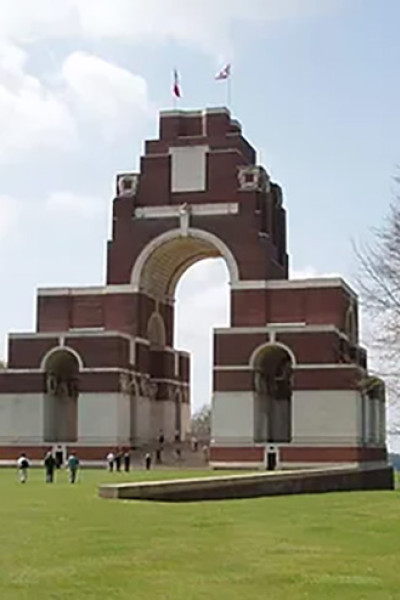
The Thiepval Memorial
The battalion landed in France in July 1915, and were in minor actions until July 1916, when they were engaged throughout the Battle of the Somme. They remained in the area throughout the cold and muddy winter of 1916/7. George Townsend was killed in the fighting along the Ancre on February 14, 1917, as they moved towards the capture of Miraumont. He is commemorated on the Thiepval Memorial.
His brother Edward was killed two months later.
George Townsend was the son of James and Matilda Townsend who lived in Cowl (Chapel) Lane. He had left to work as a gardener in Hounslow, West London, where he married and had two children. He had previously enlisted in the Royal Fusiliers, and so may have been a reservist, when he re-joined at Isleworth.
The Thiepval Memorial
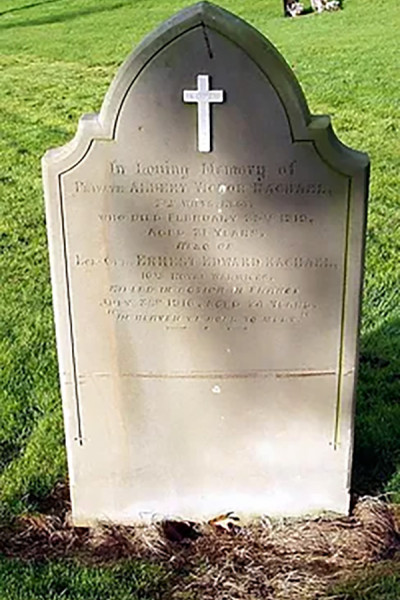
Albert Rachael’s grave which also commemorates his brother
The 3rd Wiltshires were formed in August 1914 but remained with Home Garrisons first with the Portland Garrison and the with the Thames and Medway Garrison. It does not appear that Albert Rachael served abroad during the war.
Albert Rachael was the seventh of the 15 children of Philip and Georgina Rachael, born between 1887 and 1908. Philip Rachael was a carter on farms and the family moved several times. William Rachael ,the brother closest in age to Albert , had had a variety of overseas postings during the was, travelling as far as India. At the beginning of 1919 William was living in Vineyard Street in Winchcombe, when Albert visited and died on February 24, 1919, possibly in the flu epidemic. He is buried in Winchcombe Cemetery.
His name was included recently because he is buried in Winchcombe.
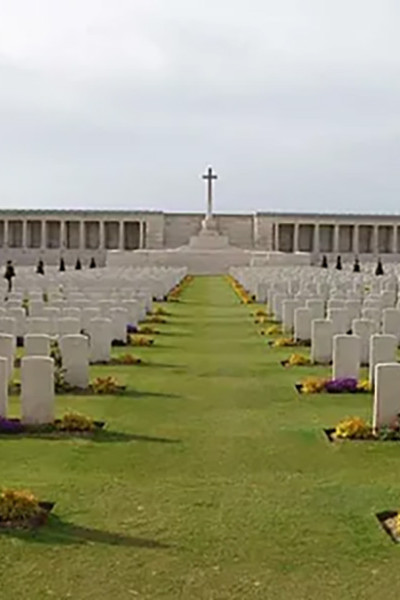
Pozières Memorial
The 2/5 Gloucesters with the 61st Division were sent to France in May 1916, and were first engaged in the disastrous fighting at Fromelles. They were withdrawn until 1917 when they pursued the German withdrawal from the Hindenburg Line. They were involved in fighting around Ypres and then Cambrai. On the first day of the German Spring Offensive, March 21, 1918, Alfred Butcher was killed as the enemy broke their lines near St Quentin. He iscommemorated on the Pozières Memorial.
Alfred was the son of a shepherd who worked for some time at Farmcote. At his death, his mother Sarah was widowed and wrote to Eleanor Adlard seeking help to find her missing son. Dear Madam. Would you kindly enquire if my son Alfred is a POW in Germany…..
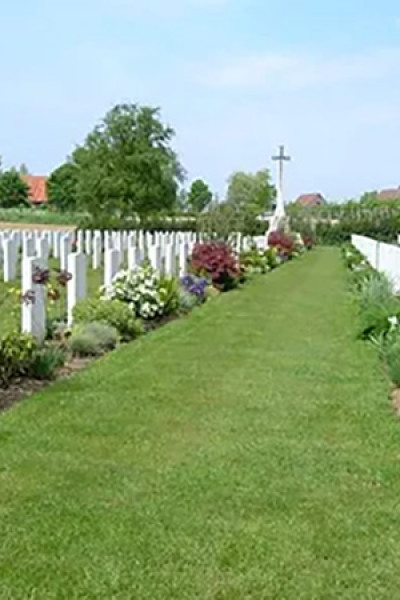
Dranouter Military Cemetery
Frank Hall volunteered in 1915 and was posted to 156 Field Company in the 16th Irish Division. They arrived in France at the end of 1915, and were involved in fighting on the Somme at Guillemont and Ginchy in 1916. In early 1917 they were moved towards the Messines area , where Frank Hall died on March 4., apparently in an accident. He was buried in the military cemetery at Dranouter.
Frank Hall was the youngest son of William Lee Hall who owned the chemist shop at the Cross, by bis second wife Elizabeth. The family was fairly prosperous but kept only one servant. They moved out to Ivy Lodge in Greet, when Frank was very young, and he later lived there with an older brother from his father’s first marriage His two full siblings had already died, and his half-brother died in the flu epidemic in 1919.
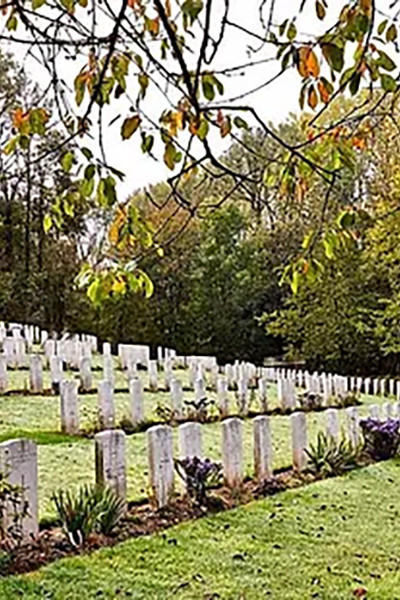
Dranouter Military Cemetery
The village of Authuille was taken by the British in the summer of 1915 and held until the German Spring Offensive of 1918. Sidney Holder belonged to a unit fighting to maintain control of the village before the battle of the Somme and died on March 10, 1916, possibly of wounds. He was buried in the Authuille Military Cemetery used by Field Ambulance units.
The Holders moved to Winchcombe from Matson in the late 1880s with two sons, one of whom later worked with his father as a stonemason. The family lived at the Coates, where Sidney and his twin sister were born in 1889. Sidney worked as a groom for the wealthy John Gibbons at Boddington Manor before the war, living in a room over the stables.
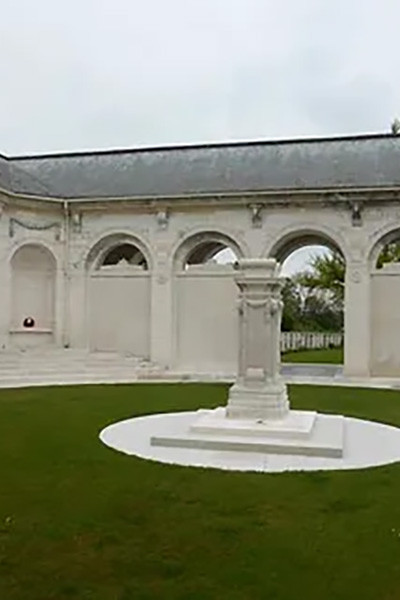
The 1st Worcesters were recalled from Egypt on the outbreak of war in August 1914 and sent to France.
Initially they were not involved in fighting but took part in the heavy fighting for Neuve Chapelle against the 21st Bavarian Division as the weather improved in the spring of 1915 . Richard Jackson was killed towards the end of the battle on March 14. He is commemorated on the Memorial at Le Touret. His death was not confirmed to his family for a month.
Richard Jackson was the middle child of five. His family lived first in Silk Mill Lane, then in Castle Street. He started work as a railway clerk, but decided to join the regular army and was already a corporal in Norton Barracks in Worcester by 1911.
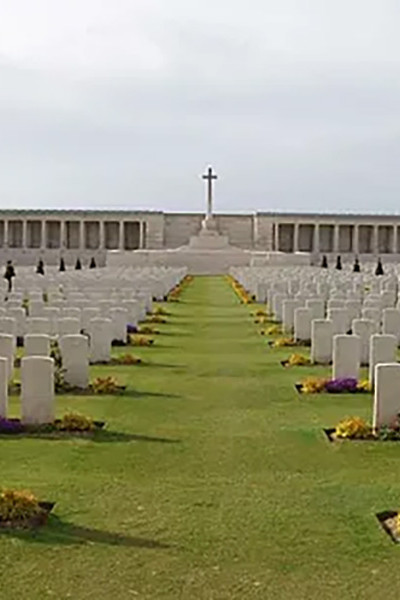
The date of William Willett’s transfer is not known, The 2nd Battalion Royal Irish Rifles fought on the Somme and then at Paschendaele. They were in the area of St Quentin at the beginning of the German Spring Offensive on March 21 1918, and William Willett was killed at the beginning of the fighting on March 24. His body was not identified and he is commemorated on the Pozières Memorial.
William was the oldest of the twelve children of Joseph and Hannah Willett. Joseph had worked as a carter. First at Condicote then in Greet, where the family lived next to the Pottery, and later on the Greet Road. William worked as farm labourer before he joined the army.
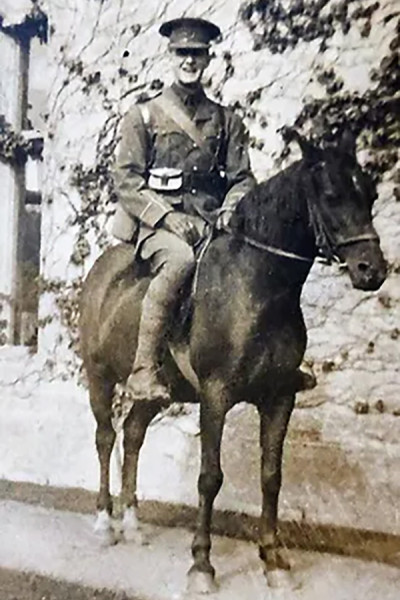
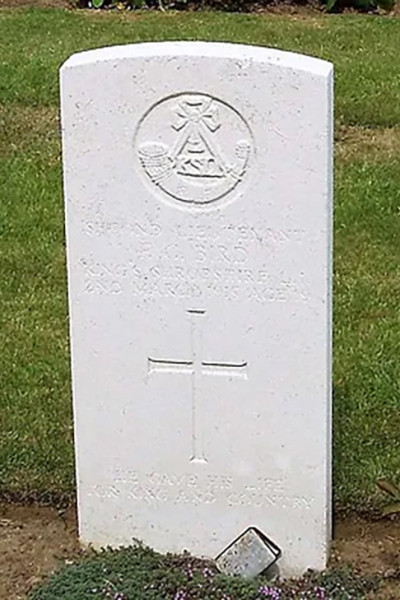
Clifford Bird’s grave at Voormezeele Enclosure No. 3
Clifford Bird was keen to volunteer when war broke and was offered the chance of a commission via a local farmer with connections to the Shropshire Light Infantry. He went for training at Pembroke dock, and after the losses and the winter of 1914-5 the battalion was sent to the Belgian front in February 1915. Clifford was killed on the front line by a sniper, after only three weeks, on March 2. He was buried in the Voorzemeele Enclosure No.3
Clifford was the elder son of Francis, a director of the paper mill, and Mary Bird, who lived at Cotswold. He had attended Cheltenham College, where he had been in the Officer Training Corps, and become a keen cricketer. On leaving school he intended to follow the family into the paper mill. Clifford was the first local volunteer, the first officer and the first local teenager to be killed. He was 19.
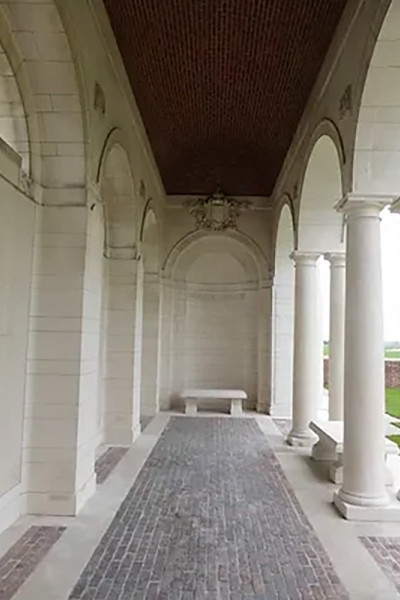
The Memorial at Le Touret
Lloyd Davies had joined the 1st Gloucester R E Company while training as a carpenter with Mr Green on the Gretton Road, and joined the army formally in 1907. He was judged a superior carpenter, and remained in the army after suffering an accident in 1909. He then worked as an electrician, but appears to have been retained as a reservist, and in August 1914 was listed as again on active service. His Unit was attached to the 8th Division at the beginning of the war. Lloyd Davies killed at the beginning fierce fighting for Neuve Chapelle against the 21st Bavarian Division on March 10, 1915. He is commemorated in the Memorial at Le Touret,one of the many British casualties. His death was not confirmed to his family for three months.
Lloyd Davies was the son Lydia Davies, who had hoped to become a teacher, but who helped her father William Davies, the parish clerk, at Three Gables near the church. She kept Lloyd with her. He had trained as a carpenter with Mr Green on the Gretton Road, and later moved to Sutton Coldfield after 1909. He married Marguerite Collins on January 14, 1913 at Sutton Coldfield, where they lived after the wedding. After the war, Marguerite Davies moved to Oxford. Lydia Davies never married and died at Three Gables in 1951 aged 88.

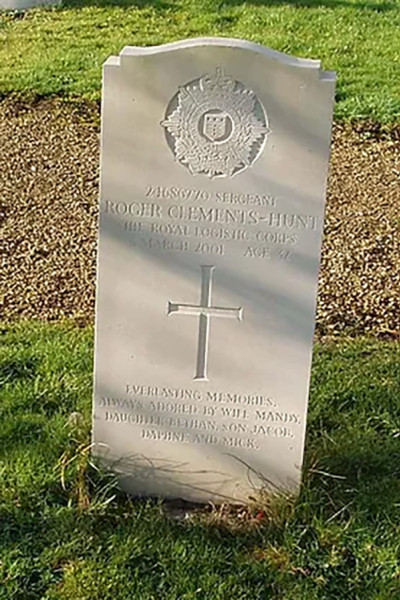
Roger Clements Hunt was killed whilst on active service in Germany on March 8, 2001. His MOD Leyland DAF was in collision with a Danish Heavy goods vehicle. Questions concerning the accident were later raised in the House of Commons when it appeared that the German police had investigated.
In the course of his career, he had been been based in London, Catterick, Hullavington, and in Herford in Germany. He was based in Osnabruck when he died. He had done tours in Canada, the Falklands, and Bosnia.
Roger Clements-Hunt joined the Catering Corps after leaving Winchcombe School, joking that he hoped he would grow taller than his 5’4”. He was the much loved husband of Mandy and father of Bethan and Jacob. He was buried in Winchcombe Cemetery.

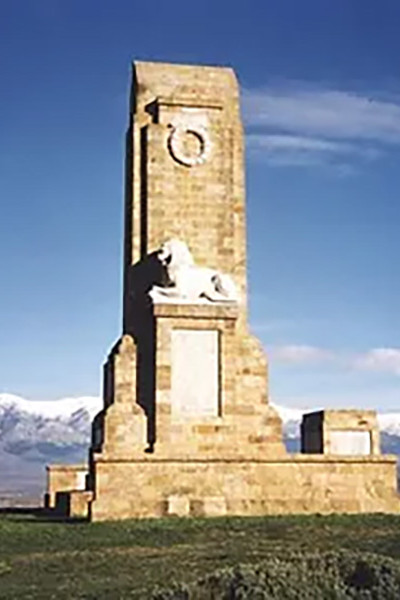
Victor Ballinger was a serving soldier with the 8th Battalion on the outbreak of war in 1914 , and served in Frances before moving to Salonika in 1915. There with the 9th Battalion, he fought with French Russian Italian and Serbian forces at Monastir, moving on to Doiran in Greece in April 1917. He was killed there on April 25, 1917 in a heavy artillery barrage, and is commemorated on the Doiran Memorial
Victor Ballinger was one of the nine children of a gardener who lived in Vineyard Street. On leaving the Boys’ School school as a young teenager he had worked as a gardener before joining up, and had also been secretary of the Winchcombe football team.

Wrongly named as Dyde C on the war memorial and as Charles by the Commonwealth War graves Commission)
The Berkshire Regiment arrived in France in June 1915 and fought throughout the war from Loos to the Somme. In April 1918 they were near Albert at the beginning of the Spring Offensive and were involved in heavy fighting for Aveluy Wood. Harold Dyde was wounded and taken to the hospital at Etaples on the coast where he died on April 11, 1918 and was buried.
Although the initial C is on the war memorial, Harold was the third son of Charles Dyde, a farm labourer who moved several times between farms around the area. Charles Dyde had five sons by his first wife, who died in 1903, His second wife Harriet, brought three more children, and there were two of the second marriage. In Winchcombe the family lived in Gretton road and then in North street. In 1912, Harold was working as a wagoner at Alcester where he married Lily Sollis, in 1910. They had a son Allan Thomas in 1913.
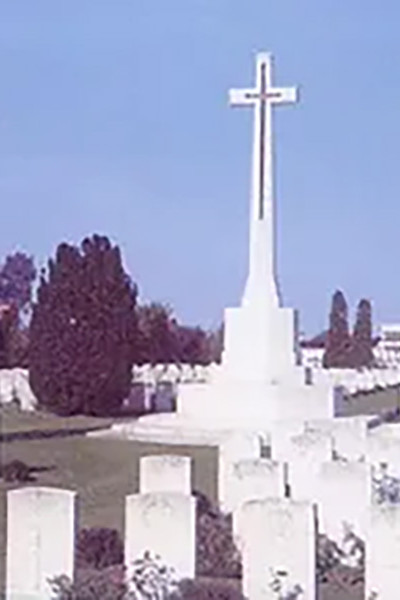
Harlebeke New British Cemetery created after the war for British soldiers brought in from German cemeteries.
The 8th Battalion arrived in France in the late summer of 1915, involved briefly near Loos. The were involved in many of the stages of the battle of the Somme in 1916, and in 1917 fought around Ypres, including Paschendaele. Arthur Care was wounded in fighting on April 10,1918 near Harlebeke in Belgium, taken prisoner, dying in a German casualty unit, and buried by them on April 11, 1918. He was buried again in Harlebeke New British Cemetery.
Arthur Care was one of the six surviving children of Charles Care, a carpenter and Julia Care, who lived in Gloucester Street. Arthur the youngest son, worked as a carpenter, probably with his father on the Sudeley estate. His death was not confirmed to the family until September 1918, when they also heard that he had won the Military Medal for bravery in the field.
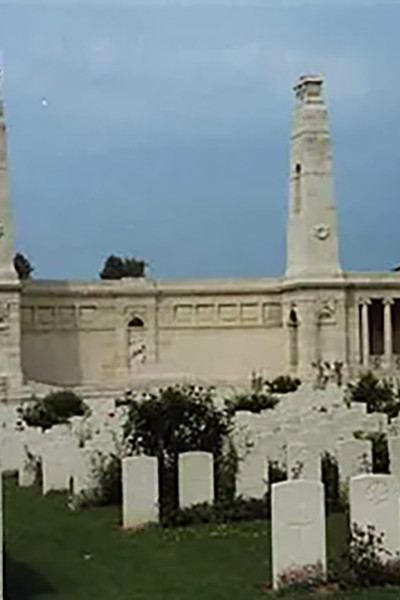
The memorial and cemetery at Vis-en-Artois
William Fry was probably conscripted when he was 18 at the end of 1917, and sent to the Lancashire Fusiliers. They were engaged in heavy fighting between Albert and Bapaume as the Germans strove to push back towards the Somme at the beginning of the Spring Offensive, when the 16th Lancashires – the 2nd Salford Pals – suffered heavy losses. William Fry was killed in action on April 23, 1918. and is commemorated on the memorial at Vis-en- Artois.
William Fry was the son of a Gretton labourer, Joseph Fry and his wife Amelia. He was the oldest of three children, and attended Gretton School before leaving at the age of 14.
Fred Goodall is listed in Winchcombe as volunteering in the early days of the war. He appears to have had a variety of postings, in France and in the Mediterranean having been transferred to the Special reserve. His last posting was home from December 22-March 23, 1918 when he was discharged citing ‘debility’, unspecified ill-health. His service was reckoned to have been 3 years and 355 days. He died in Winchcombe the autumn of 1919, and is not listed by the Commonwealth War Graves Commission
Fred Goodall was the older son of Frank Goodall, a labourer and his wife Mary. The family lived in Hailes Street next to Tudor House. Fred’s three older sisters all went into service, and Fred probably worked as a labourer after school
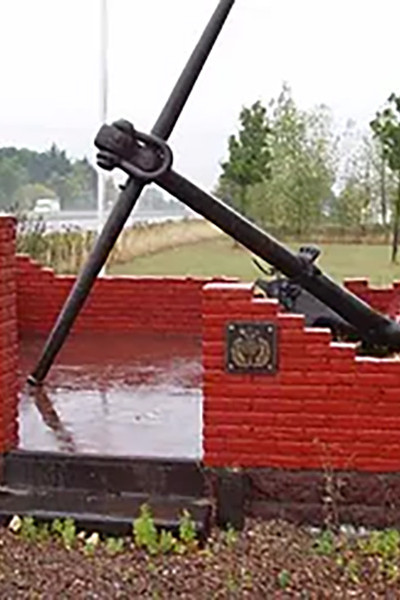
The Memorial to the RNLI at Gavrelle
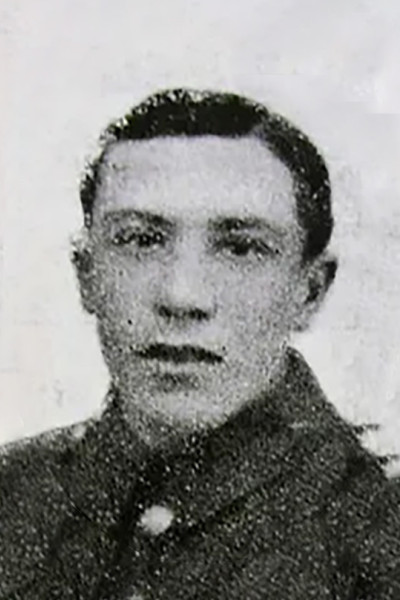
Early in 1917 the Germans began a strategic withdrawal from the Somme to beyond Arras with various lines of trenches including the Oppy Line which ran south east of Arras. After the beginning of the Battle of Arras on April 9, 1917, further engagement with the Germans was extended along the Oppy Line at Gavrelle where there was fierce fighting to capture the windmill on higher ground in the face machine gun fire and repeated counter attacks. Leonard Greening was killed on April 28, 1917, and is commemorated on the memorial at Arras.
Leonard was one of the six children of Thomas Greening, a road labourer, and Edith who worked st the paper mill. They lived in Chandos Street. When he left school Leonard worked as telegraph boy, and when he had to take messages over long distances after dark his father would go with him for support.
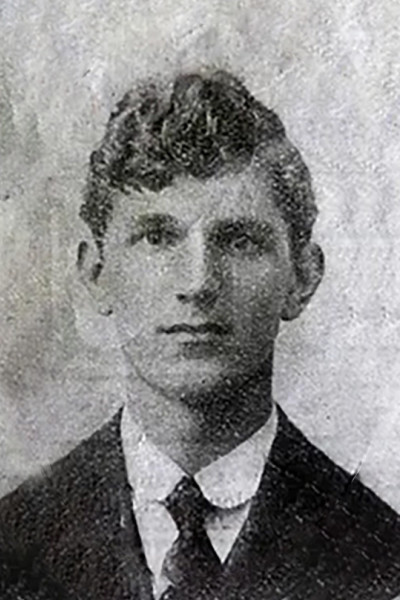
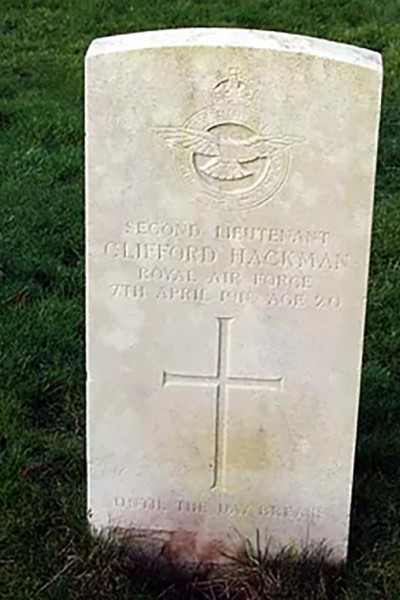
Clifford Hackman’s grave
Clifford Hackman joined the Royal Flying Corps when he was 18 and subject to conscription, He worked as a mechanic and in 1917 volunteered for pilot training. He was commissioned Lieutenant on November 8, 1917. He was based at Tangmere. On April 7, 1918, he was flying two seater Avro 504, No. B986 with an instructor, over Oving, when they were hit by a single seater Sopwith Pup. The two planes crashed and Hackman was declared dead at the site, with the other pilot, on April 7, 1918. He was buried in Winchcombe Cemetery.
Clifford Hackman was one of the two sons of Edwin and Mary Hackman, born in Winchcombe. His parents moved to Swindon, where Clifford grew up, but retained close relations with their Winccombe families. On leaving school Clifford worked as clerk at the Swindon GWR Works until called up at 18.
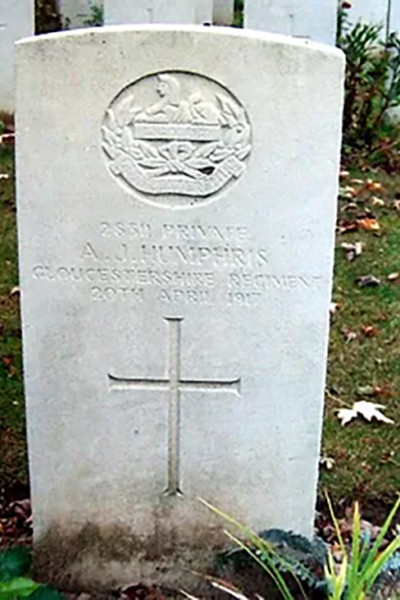
Alfred Humphris’ grave at La Chaudière Military Cemetery
The 12 Battalion landed in France in November 1915, and later took part in battles on the Somme in 1916. Alfred Humphris is unlikely to have been old enough to have joined the battalion before then. In October 1916, the Battalion moved to Festubet and in March 1917, took part supporting Canadians in the fighting for Vimy Ridge. Alfred Humphris was killed on April 20th 1917, one of seven men who died at Cité des Petits Bois, and is buried in the cemetery at La Chaudière below Vimy Ridge.
Alfred Humphris was the second of seven children of James Humphris, a baker and confectioner, and his wife Charlotte, who lived in Gloucester Street. He left school at 13 to work as an errand boy. His older sister Kate. Who had gone to work as kitchen maid in a boarding house of Cheltenham Ladies College, died in 1918.
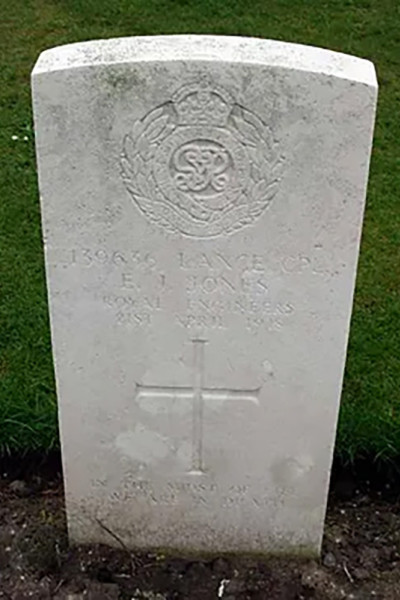
Ernest Jones’ grave in Ramparts Cemetery
Ernest Jones enlisted with the Gloucesters in Cheltenham in August 1915, and at some stage was re-deployed to the Royal Engineers. In the last year of the war the 12th Company was involved in the defence of Ypres and Ernest Jones was killed on April 21, 1918 with three other men from 12 Coy by a bomb dropped from a German plane. They are buried together in Ramparts Cemetery Ypres.
Ernest Jones was one of the sons of Albert and Eliza, originally from Bredons Hardwick. He worked with his father and brother Henry with Collins and Godfrey builders before the war. Henry died of wounds the month after his brother. He married Emma Pumphrey from Winchcombe in 1906, and the couple had two daughters. They lived for a time in Union Cottage in Winchcombe. In 1921, Emma re-married to Alexander Johnston, and lived on the Gretton Road.
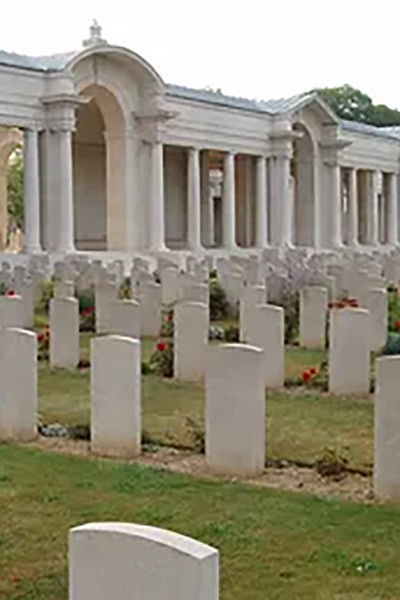
The Arras Memorial and Cemetery
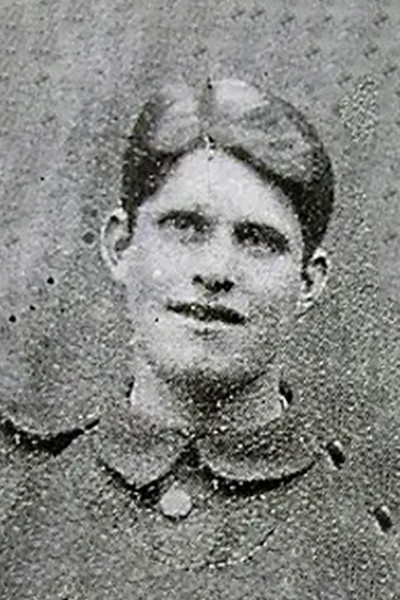
He is commemorated on the second part of the Winchcombe list, begun after 1915.
Early in 1917 the Germans began a strategic withdrawal from the Somme to beyond Arras with various lines of trenches including the Oppy Line which ran south east of Arras. After the beginning of the Battle of Arras on April 9, 1917, further engagement with the Germans was extended along the Oppy Line at Gavrelle led to fierce fighting in which Walter Oakey was killed on April. 28, 1917. He is commemorated on the Arras Memorial.
Walter Oakey was the son of William Oakey, a stone mason, and bis wife Louisa. They lived at the bottom of Hailes Street, and ultimately had seven children. When he left school Walter worked as an assistant baker.
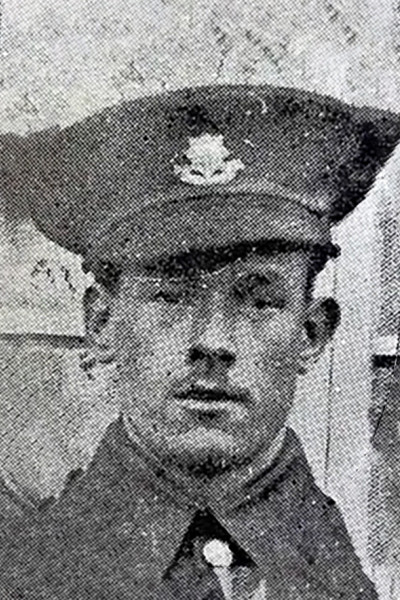
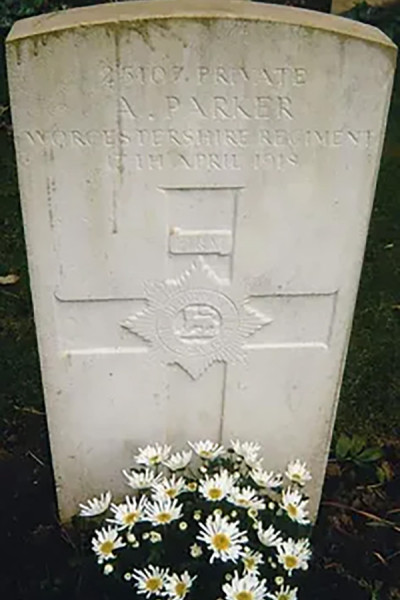
Andrew Parker’s grave at Mont Noir. Flowers left by a visitor to the museum visiting a family grave at Mont Noir and read the Parker’s story.
Andrew Parker volunteered in November 1914, and after training could have been quickly posted to the 4th Worcesters returned from Burma. They fought at Gallipoli in 1915, before being sent to France where they fought on the Somme, and at Arras. In 1918 they moved to the Ypres Salient, fighitng at Messines in April 1918 during the Battle of the Lys, when the Germans were attempting to break through to the higher ground south of Ypres. Andrew Parker was killed on April 17, 1918, and was buried in nearby Mont Noir Cemetery.
Andrew Parker was one of the 7th son of Richard and Rosina Parker, who had struggled to earn enough to keep their growing family. In 1914 Andrew married Daisy North in Bromsgrove. She was then just 18, and had been working as a domestic servant since her early teens. They lived in Silk Mill Lane where they had two sons before Andrew’s death.
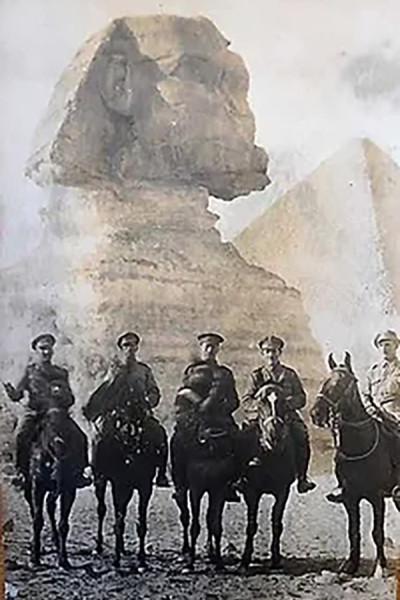
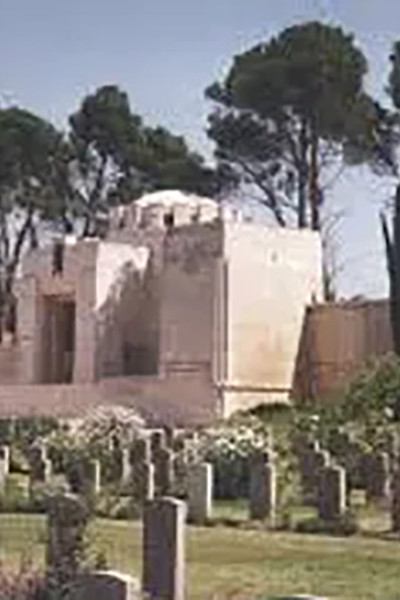
The Jerusalem Memorial
The Royal Gloucestershire Hussars had been formed first in the 18th century as a volunteer yeomanry, but became part of the army reserve, volunteering in the First War to serve abroad. In April 1915 they left for the Middle East. Some fought at Gallipoli but in 1916 were sent into the Egyptian desert to guard water supplies for the railway builders. A Squadron was attacked at Katia on April 23 but Turkish forces in a raid from which only one man escaped after a days fighting. Howard Peacey was killed in the attack on April 23, and is commemorated on the memorial in Jerusalem.
He was the older son of Frederick Peacey who had moved to Manor Farm in Greet. He intended to farm himself and before the war was helping his father on the farm. In his will he left a kepsake to the girl who probably intended to marry. Frederick himself was very active in town life. Howard had joined the Hussars before the war. His younger brother, Arthur, joined the Royal Flying Corps and after the war lead the committee which planned the war memorial.
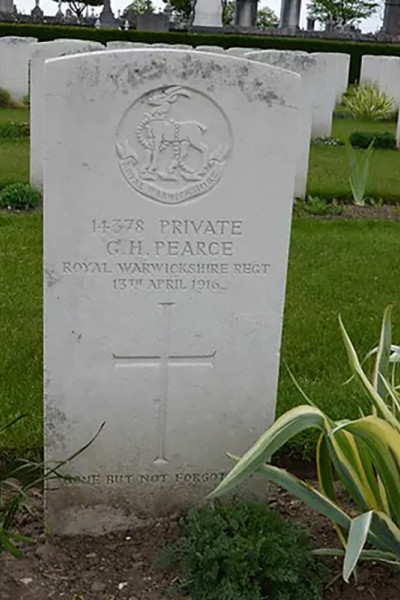
George Pearce’ grave at Calais Southern Cemetery
George Pearce appears in the second part of the Winchcombe war list of men who served, and probably joined the Warwickshires in late 1915 or early 1916. They were involved in the fighting near Loos and moved south to take part in fighting on the Somme. George Pearce was probably wounded before the move to the Somme and moved to one of the hospitals in the large Calais complex where he died on April 13, 1916, and was buried in Calais Southern Cemetery. It is likely that he had been in France for only a relatively short time.
George Pearce was one of the two sons of William Pearce by his second marriage. William Pearce had been a prison officer and had then become Master of the Cheltenham Workhouse. His first wife Charlotte died in 1898. He retired to Winchcombe on a Poor Law Pension with his second wife Mary, who was nearly forty years younger. George was their second son. The family had a long- serving servant, May Clegg, whose brother, Wincel, was also killed.
Albert Rachael’s grave which also commemorates his brother
The 3rd Wiltshires were formed in August 1914 but remained with Home Garrisons first with the Portland Garrison and the with the Thames and Medway Garrison. It does not appear that Albert Rachael served abroad during the war.
Albert Rachael was the seventh of the 15 children of Philip and Georgina Rachael, born between 1887 and 1908. Philip Rachael was a carter on farms and the family moved several times. William Rachael ,the brother closest in age to Albert , had had a variety of overseas postings during the was, travelling as far as India. At the beginning of 1919 William was living in Vineyard Street in Winchcombe, when Albert visited and died on February 24, 1919, possibly in the flu epidemic. He is buried in Winchcombe Cemetery.
His name was included recently because he is buried in Winchcombe.
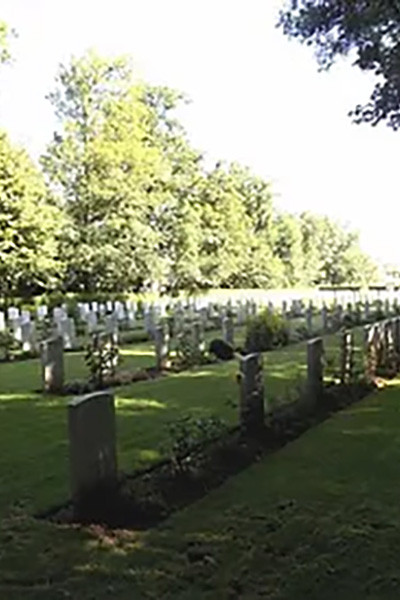
Agny Military Cemetery
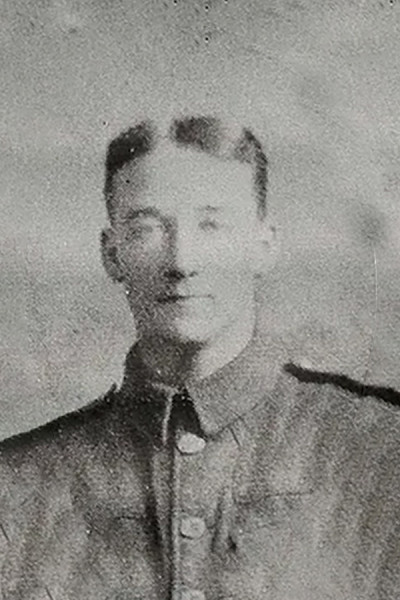
Tom Richings volunteered in 1914 and was assigned to the 15thHussars who in turn were attached to other units to form a reconnaissance element. The DLI in the 14th Division fought around Ypres in 1915, but moved south to the front line in France. A signaller had to work close to the front line to ensure communications, sometimes laying or tracing faults and repairing wires, often exposed to enemy fire. Tom Richings was killed on April 7, 1916, and buried in the Agny Military Cemetery at Agny.
The Richings family originally had worked as potters, but Tom’s father worked as a labourer. He was the second of six children, living first at Footbridge and later Bull Lane. He married Annie Jeffries in December soon after joining the army, and daughter, Joyce, was born in June 1915.
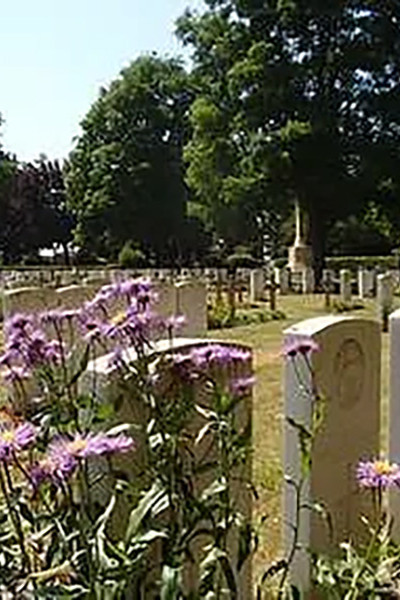
St Patrick Cemetery Loos-en-Gohelle France
The 10th Gloucesters landed in France in August 1915 , attached to the 1st Division and fought in the battle of Loos in October that year. Fighting, sometimes heavy, continued intermittently, in the area through the winter, and Edgar Stephens was killed in action on April 20, 1916, and buried in St Patrick’s Cemetery, which had originally been started by Irish units.
Edgar Stephens was the second of the six children of William and Ellen Stephens. William was a carter and the family moved from Hailes, where Edgar was born via Didbrook and Gretton where Edgar went to school. He left school at 12 but did not become a labourer on a farm but was first and errand boy and then a porter at Toddington, lodging nearby.
A younger brother, Job, was killed the following year.
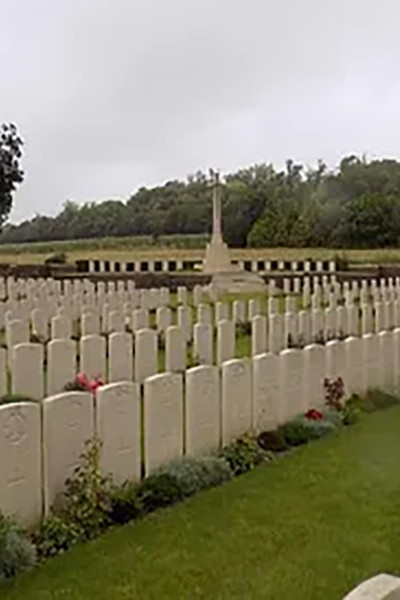
Templeux-le-Guérard Military Cemetery
Edward Townsend joined the army with his brother probably after conscription was introduced in 1916. The regiment was engaged in much of the fighting on the Somme in the summer of 1916, pursuing the Germans as they withdrew towards the Hindenburg Line beyond Arras in April 1917. The Gloucesters were involved in fierce fighting from April 12, to take the village of Templeux-le-Guérard. Edward Townsend was killed on April 13, 1917, and was buried in the cemetery at the village.
Edward was the younger son of James a carter, and Matilda Townsend. They moved from Sudeley, where Edward worked as groom, to a cottage at the end of Back Lane. In 1917, Matilda lost both her sons and her husband within four months of each other. Matilda moved to Cowl Lane where she lived on until 1935.
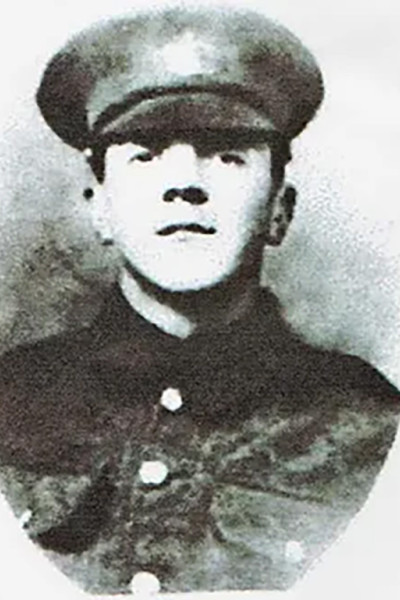
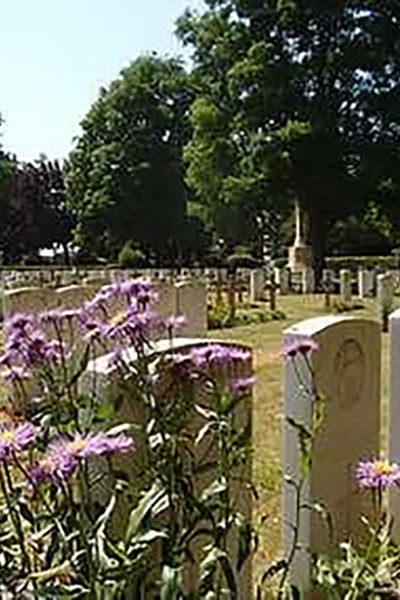
St Patrick Cemetery Loos-en-Gohelle France
Tom Wasley probably volunteered in 1915, when he was not quite sixteen. Family members remembered that he did so against his parents wishes and threatened not to see them again if they reported his being under age. He is listed with the 3rd Battalion in Winchcombe, but appears to have been transferred to the 1st. They were actively engaged by the Germans in the Loos sector when Tom Wasley was killed on April 28, 1916, aged 16. He is buried at St Patrick’s Cemetery Loos.
Tom Wasley was the oldest of the six children of Charles Wasley, a farm worker, and Ellen. The family lived on the Gretton Road. Their younger son died of diptheria a few months later.
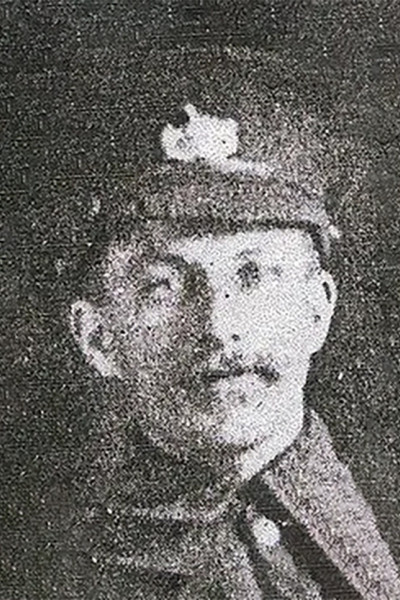
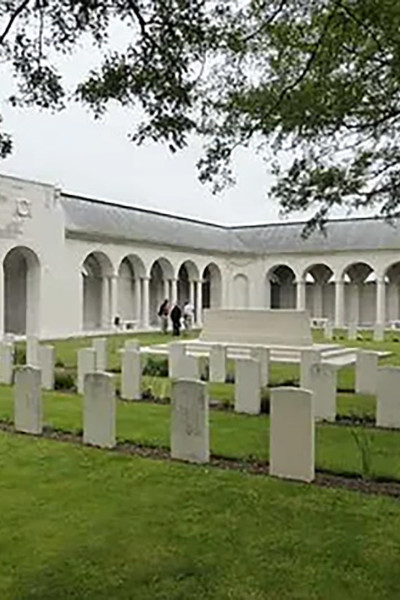
The First Gloucesters were among the first to land in France in August 1914. He died in heavy fighting in the face of machine gun fire at Aubers Ridge on May 9, 1915.Commemorated on the Le Touret Memorial.
William Parker was born in Winchcombe His young mother died when he was a child, and he was brought up by other family members.
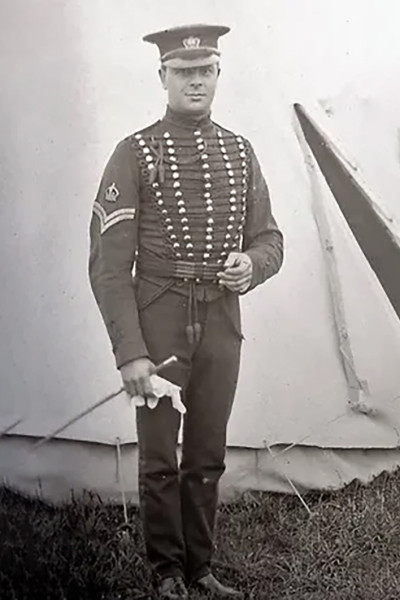
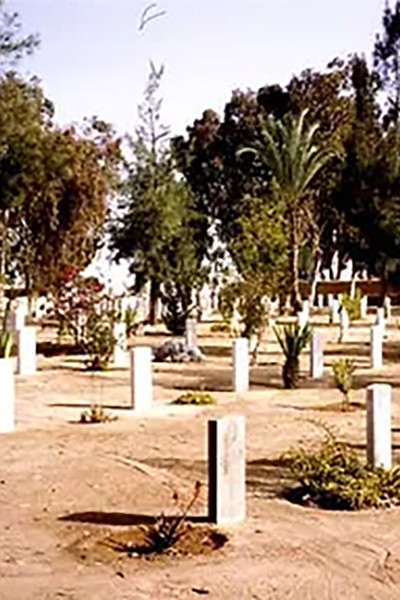
Wounded at the battle of Katia on Easter Sunday 1916, and taken prisoner,
Died at El Arish Egypt May 14 1916. Buried in Kantara Military Cemetery Egypt near the Suez Canal
Thomas was the son of a Norfolk country gentleman and came to came to live in Winchcombe with his widowed mother before the First World War. He was very active socially, was secretary of the football team, his own cricket team, sang with the opera group and most significantly was a founder member and first secretary of the Working Men’s Club.

Based at the Moascar Garrison near Ismailia and the Suez Canal in Egypt, the Pioneer Corps was formed in 1939, combatant troops who undertook light engineerng tasks. Henry Stratford died of disease on May 29, 1943, aged 27. Buried in the Moascar Cemetery, near Ismailia.
He was born in Winchcombe in 1916, one of the youngest children in a large family. His father had been involved in gardening in this area, but in 1939, they had moved to Coventry. Henry was them living and working with Reginald Mason, a coal merchant.

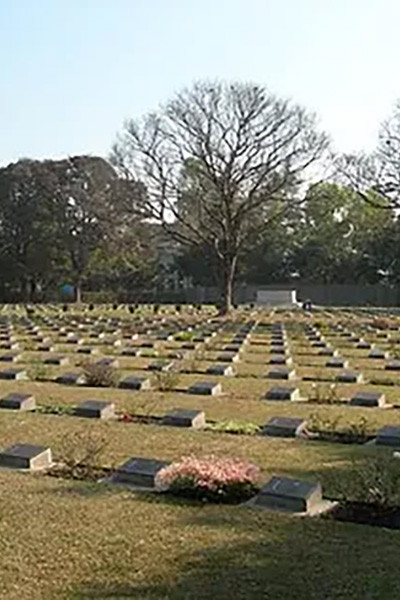
When the Japanese invaded Burma in 1942, Rangoon was threatened ,and the decision to evacuate the city was made on March 7. Thousands of civilians , and later soldiers struggled without transport north along the Chindwin trails towards the Indian border, with increasing difficulty as the monsoon broke. Graham Soden died of blackwater fever on May 18, the second anniversary of the death of his brother Ian.
Graham Soden is buried in Imphal Cemetery in India, a concentration cemetery with graves from other cemeteries around, so it is not certain where he died.
The oldest son of the Winchcombe doctor, he was a keen sportsman. After school and work in London, in the timber trade, he went to work in Rangoon in Burma (Myanmar), and joined the Reserve of Officers As the war there broke out.

Early in 1955 the regiment was sent to Kenya, based in the barracks at Gilgil to control and suppress violence by the Maumau fighters . Even though this was towards the end of the insurgence, attacks were still taking place, and it appears that john Launchbury was killed with others when their lorry was blown up.
He died on May 9, 1995 and buried in Kenya. Is body was then exhumed as hismother wished, and returned to be buried in Winchcombe Cemetery on July 17,1956 in the family grave.
John Launchbury seems to have been an only child, born in 1934 after many years of marriage. His father Alfred had worked as a gardener, and was a special constable during the war. He had died shortly before his son, leaving Norah Launchbury alone in Abbotts Leys Road.
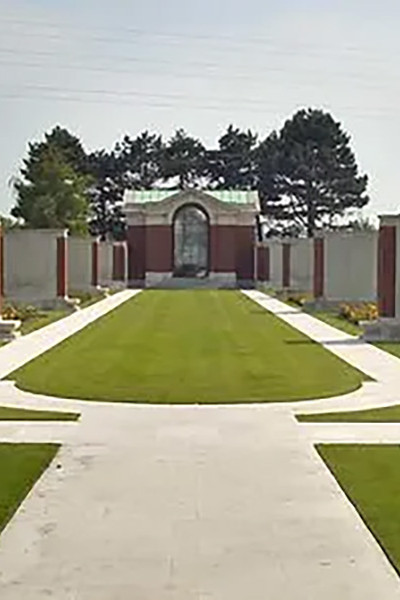
Sent to France at the beginning of the war, with the British Expeditionary Force anda part of the retreat to Dunkirk in May 1940. Edward Davis was picked up from the East Mole by HMS Grenade, which was then bombed, towed out to sea and sunk. He is recorded as dying at sea., May 29, 1940. Commemorated on the Dunkirk Memorial.
The Davis family moved to Gretton from Birmingham. Their oldest son, James, was killed near Arras in on May 9, 1917, a third son, Ernest, died as a result of illness after Dunkirk in 1942.
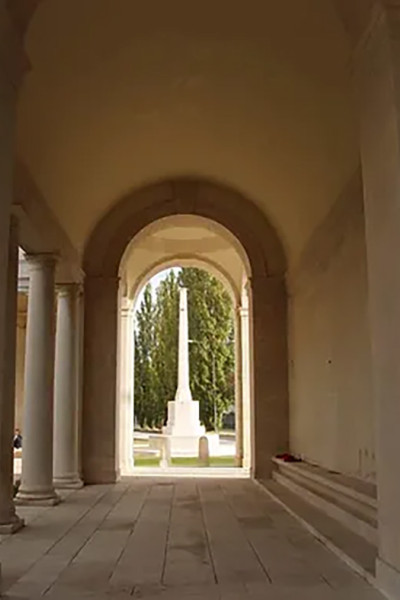
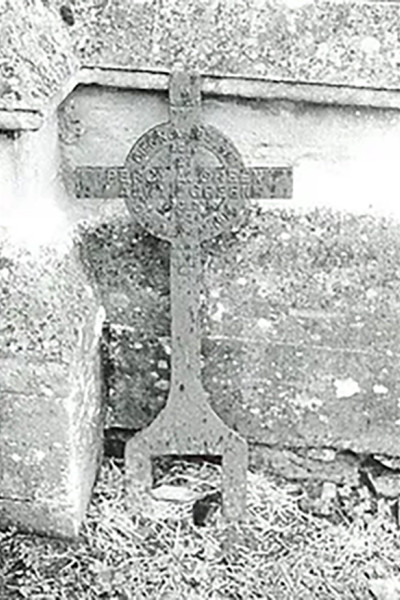
The 12th Gloucesters had taken part in the fighting for Vimy Ridge led by Canadian troops, and moved towards Arras. They were involved in heavy fighting with heavy shelling, in rain and mud , attacked again by the Bavarian 5th Division. The battalion suffered very heavy losses. Alwyn Green was killed in action on May 8, 1917, and is commemorated on the Arras Memorial.
Alwyn worked as an under carter on the fruit farm. He lived with his widowed mother, Emma in Toddington. The year before, his only brother, Percival had also been killed. Emma placed a small memorial to her sons in Toddington Churchyard, which has now been taken.
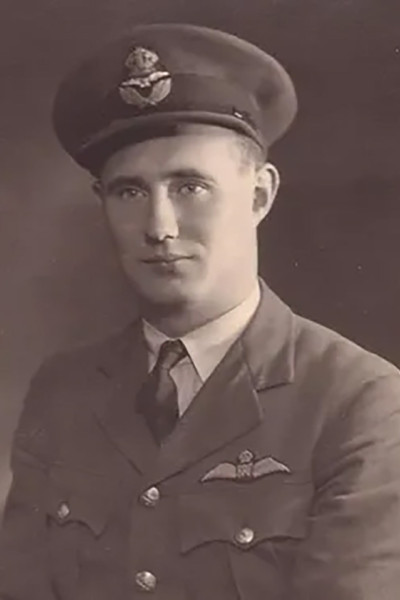
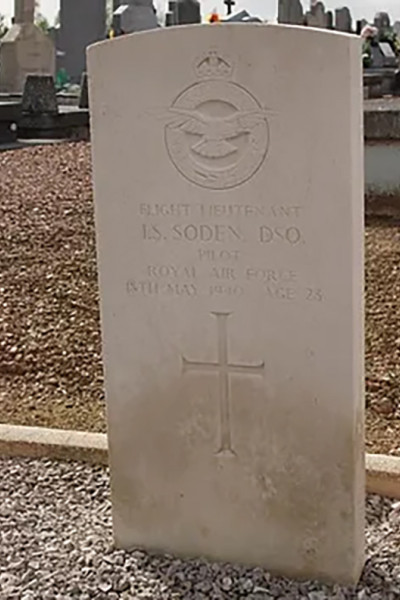
As the Germans invaded France in May 1940, he was ordered to France leading B Flight on May 16. After a number of sorties on May 17 he was seen attacking a large German formation on May 18, shot down and killed.
Later described as ’an officer of glittering promise’ he was awarded the DSO
Buried in France in the cemetery of Biache-St-Vaast near Arras.
Ian Soden was the second of the three sons of Dr Soden who lived in the Bank House, and who worked to set up Winchcombe Hospital in 1928. Ian had an excellent career at Cranwell and by the outbreak of the war led B Flight of 56 Squadron based at North Weald, at the age of 23.
Ernest Hall volunteered to serve on September 1, 1914 and went to Tidworth with others from Winchcombe to train. In January 1915 he was found to have TB in both lungs and was discharged. He died and was buried in Winchcombe in May 1916, aged 19.
Ernest Hall was the son of Harry Hall, a builder who was also a leading member of the Gloucestershire Voluntary Engineers who had served in South Africa. The family moved from Union Cottage to Gloucester Street. Ernest worked as an errand boy for a draper when he left school – his sister Gladys, who worked for the draper , had died in February 1916.
His name was included on the Winchcombe Memorial in memory of his willingness to serve. He does not appear on the Commonwealth War Graves Commission list.
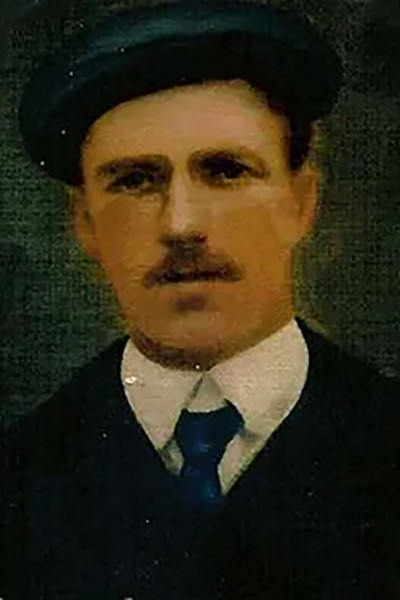
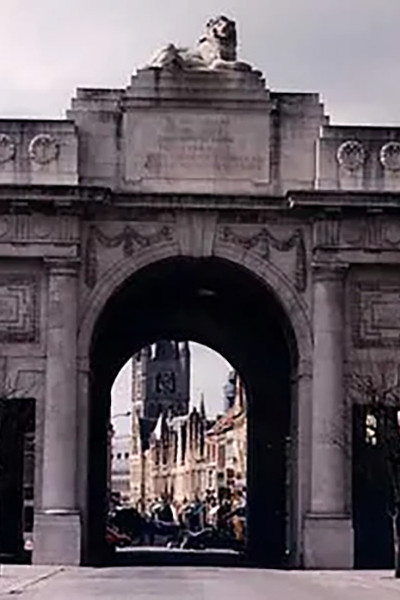
A reservist called up on August 5, 1914, he took part in the retreat from Mons to the Marne and then in the defence of Ypres .He died in heavy fighting at Hooge on the Menin Road on June 16, 1915 He is commemorated on the Menin Gate in Ypres.
Albert was a married man with four children, and worked in a market garden. The family lived in Hailes Street. When he left Winchcombe his wife was pregnant with a fifth child, who was born just before he was killed.
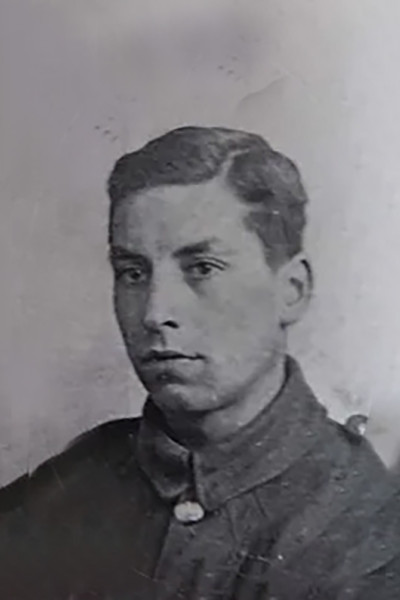
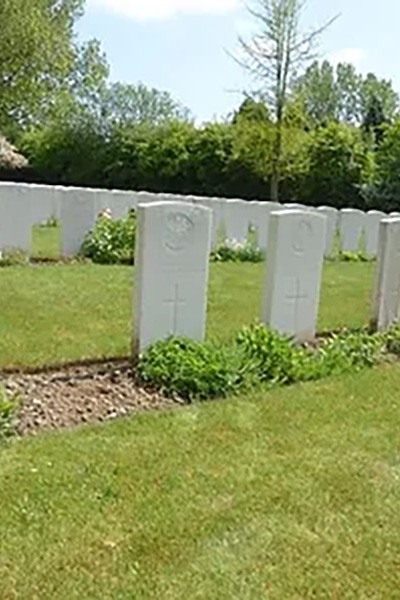
The 2/5 Battalion left for France on May 24, 1916. They were in action at Fauquissart in the Pas de Calais in northern France from June 16. On the night of June 20, one man was killed, and others in a raiding party cut down by machine gun fire. Jack Hall was one of these men who areburied together in Royal Irish Rifles Cemetery His grave is the first on the left.
Jack was an only son. He had worked as a clerk at the jam factory, and married Matilda Banks not long before he left. He was a friend of the poet Ivor Gurney who wrote a poem commemorating Jack and his friend Ernest Skillern - ‘To Certain Friends’ (J H and E S )
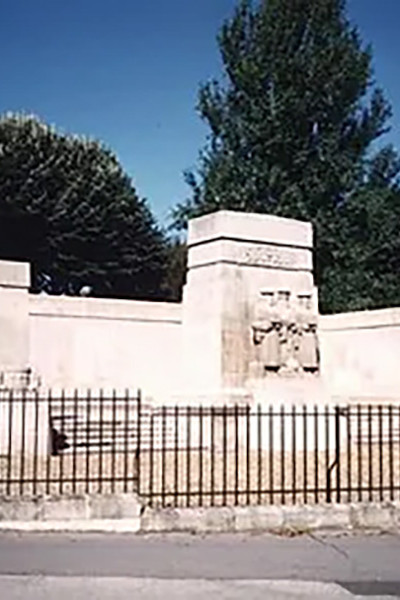
The 8th Battalion formed part of the 19th Division which was heavily involved in the German Spring offensive of 1918 to push the Germans back from the Marne and the Aisne. In June they were involved in heavy fighting from Sarcy to Chambrecy, before being moved back. Hubert Tripp is reported to have died of wounds on June 21, 1918.He has no known grave and is commemorated on the Memorial at Soissons.
Hubert’s father worked as a labourer, and the family moved several times. Hubert was born at Arlington. During the war, they were living at Culls Meadow in Toddington.
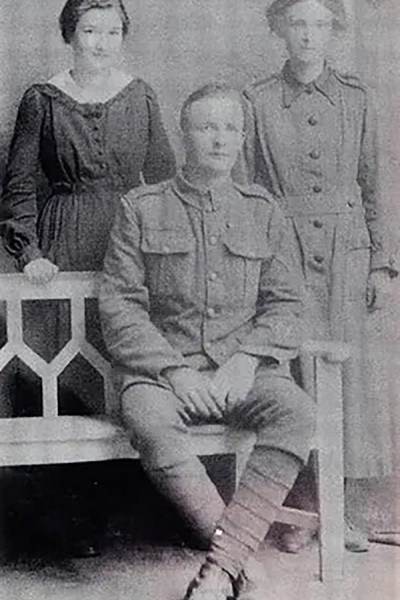
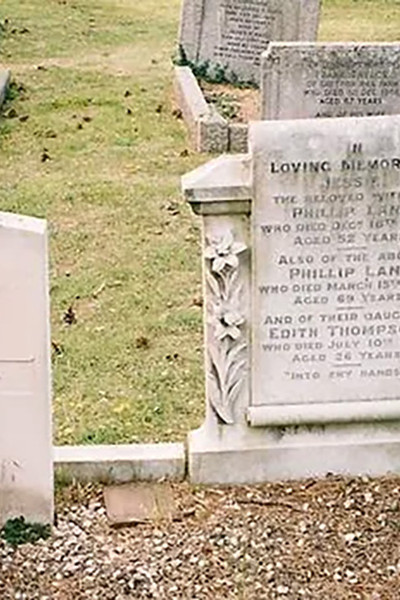
Harry Lane joined the 14th Battalion in 1915. They landed in France in June 1916, and were involved in heavy fighting around the Ancre at the end of the Battle of the Somme. In the spring of 1917, the 14th Battalion was involved in fighting around Arras, particularly at Gavrelle. Harry Lane was wounded, and repatriated. He died of infected wounds in hospital in Epsom on June 26, 1917, and is buried in Gretton churchyard.
He was one of a large family in Gretton -his father worked on the Stanway estate. One sister became a teacher at Gretton school.
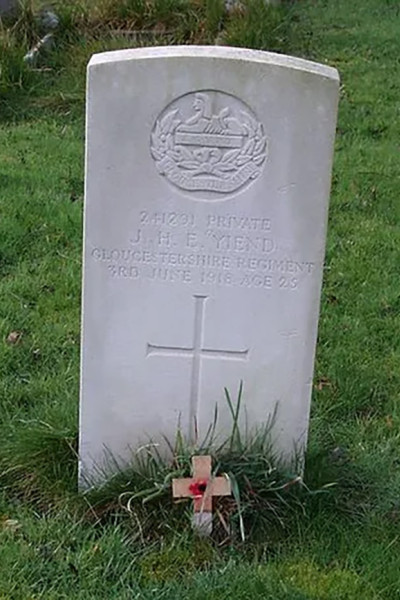
James Yiend’s unit was involved in heavy fighting near Amiens in April and had been withdrawn to what was believed to be a quieter area when the Germans launched a heavy attack near La Bassee Canal in May 1918. James Yiend was wounded in fighting in May 1918, and was repatriated to hospital in Bath where he died on June 3. His body was brought back to Winchcombe where he was buried in Winchcombe cemetery after a requiem mass.
James Yiend was one of four sons brought up by their widowed mother in Gloucester Street, where she kept a shop. James trained to use a typewriter, often used then by men, and worked for Harrods in London before joining the army.
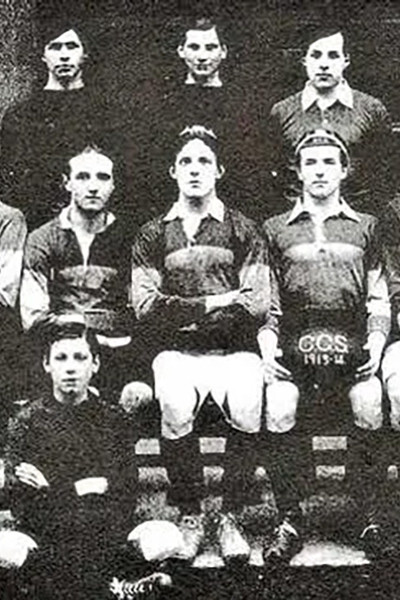
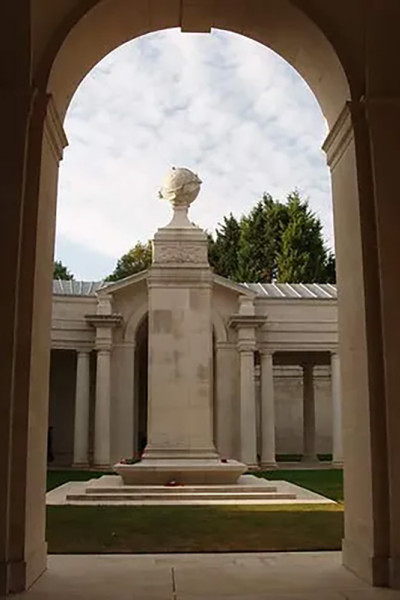
Robert was based at St Marie Cappel near Cassel on the French/Belgian border. He and his observer, Reginald Hayes, were flying a Sopwith 11/4 Strutter, and had been credited with one kill on July 17, before being shot down. Their bodies were not recovered and they are commemorated on the Flying Services Memorial in the Faubourg d’Amians Cemetery at Arras.
The Deakin family came from Wigan, but built up a very successful business at the jam factory in Toddington. Robert was a successful athlete and scholar at Cheltenham Grammar school, before winning an Open Natural Sciences Exhibition to Jesus College Oxford. He left for Sandhurst, was posted to the distinguished !0th JATS in the Indian Army, and volunteered for the RFC and pilot training in 1917.
Two of his brothers won the Military Cross
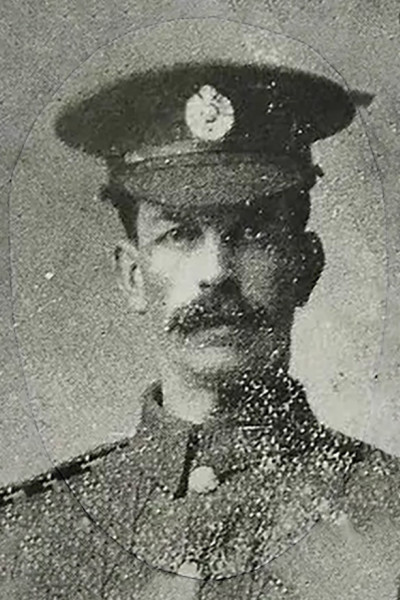
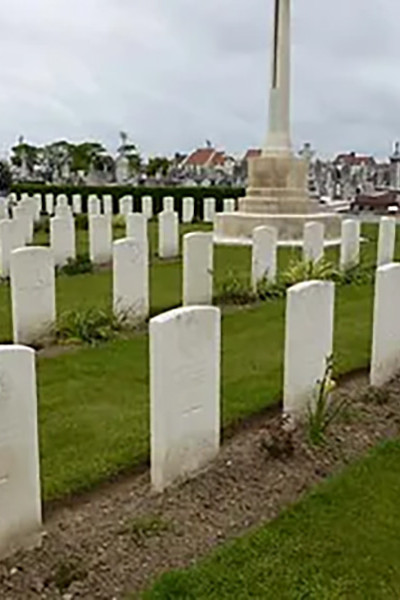
Railway companies built miles of track to ensure supplies of essential supplies to the front line. Calais was a new military supply base in 1915 Arthur Giles was killed there with four other men in an accident on July 21, 1916. The five men were buried with military honours in Calais Southern Cemetery.
Arthur Giles was married with a daughter. He lived in Greet and was a platelayer on the Gloucestershire Warwickshire Railway.
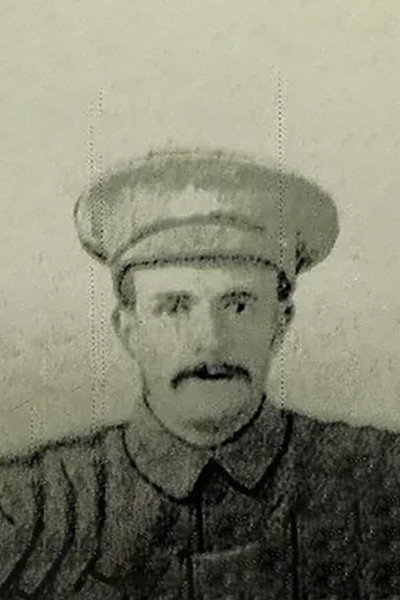
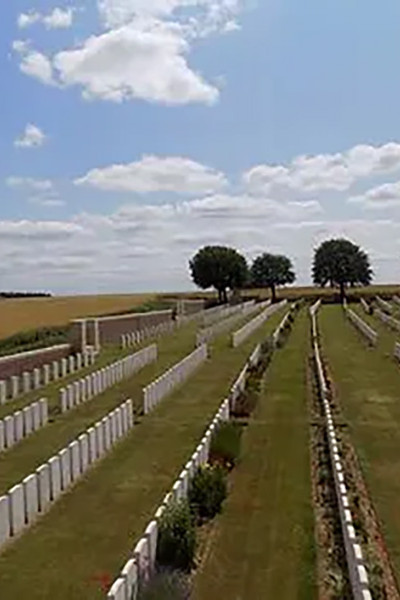
The battalion was involved in heavy fighting around Orvillers during the Battle of the Somme, and came under attack from bombing and artillery during the night of July 23.
Herbert Minchin died on July 24, 1916 in a Casualty Clearing Station at Puchvillers and was buried in the Cemetery at Puchvillers
Thomas was the youngest of the five surviving children, born in 1886. The Minchin family
lived at Ireley Cotttages for some years. Thomas’ father, worked as a carter, and Thomas worked as a labourer, possibly at the pottery.
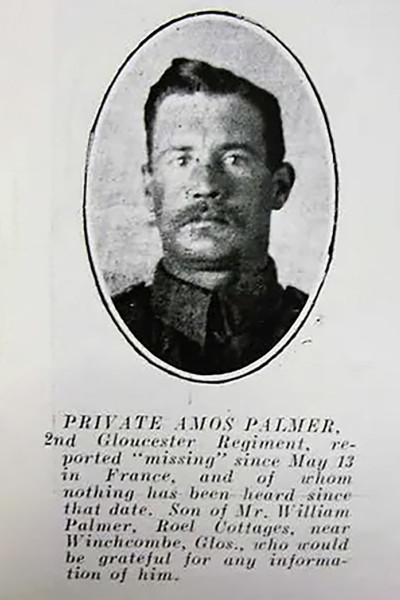
Amos Palmer's record suggests that he arrived at the regular battalion in May 1915, during the heavy fighting of the Second Battle of Ypres. Amos' parents heard he was missing in May 1915, when there are two possible dates of death but his official date of death is July 5. He almost certainly died before this but in the confusion of the fighting his fate is uncertain. He is commemorated on the Ploegsteert Memorial.
Amos was the only son of William and Annie, who also had a daughter, William was a carter on a farm, and the family moved for work several times, but in 1911 they lived at Hailes Cottages. Amos also worked on a farm.
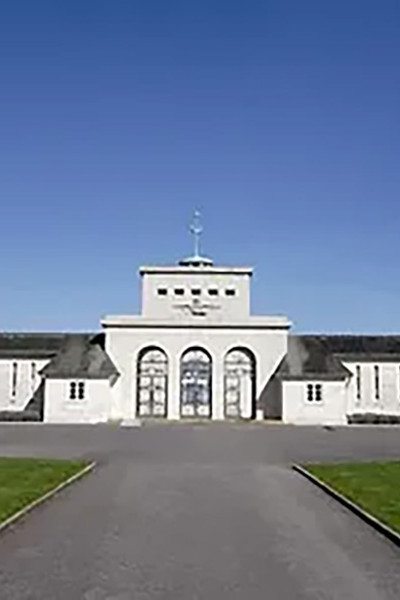
141 Squadron, equipped with relatively untried Boulton Defiants, moved to Biggin Hill in July 1940, to patrol over the Channel after the fall of France.Defiants had a single cramped gun turret facing backwards behind the cockpit. If the plane was hit, the gunner, like Dudey Slatter, stood little chance of baling out. In their early patrol on July 19, there were serious losses, especially among the gunners. Dudley Slatter's pilot survived. He is commemorated on the Runnymede memorial.
Dudley's grandfather had been a Winchcombe Bailiff, and other family members for many years ran the school in Hailes Street.
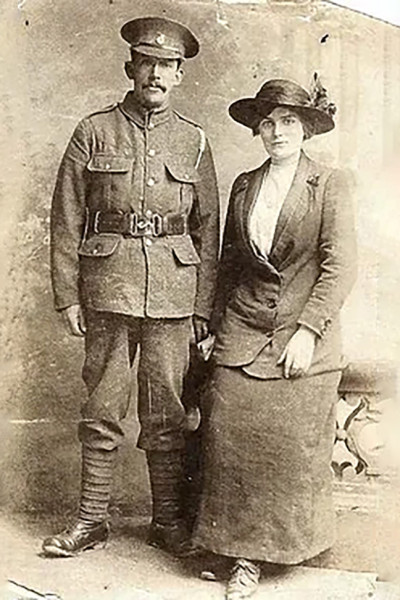
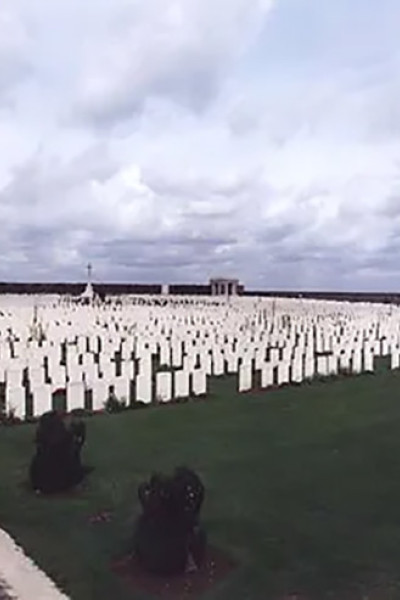
Royal Navy Divisions became part of the army in 1916. After fighting at the Somme in 1916, they were moved to the Arras area, where they fought during the spring and summer of 1917. George Tustin was killed in later fighting in the area, probably near Bailleul-Sire-Berthoult, and re-buried at Orchard Dump Cemetery after the war.
George was born in 1886 ,one of the nine children of John Tustin a labourer, who lived in Gloucester Street. After their parents died the unmarried children lived together – George and a brother worked on the fruit farm. He married Annie Barrett in 1911. One of his sons, Sidney, became a very well-known potter.
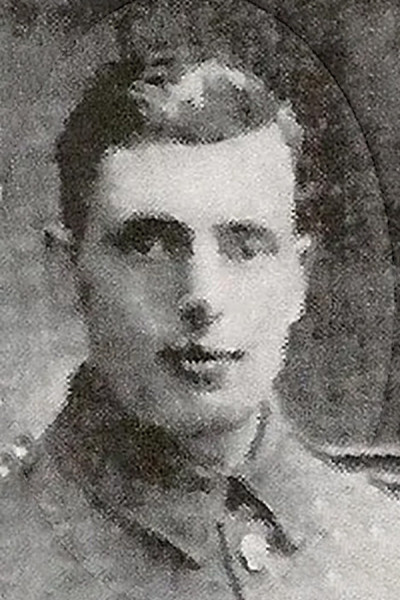
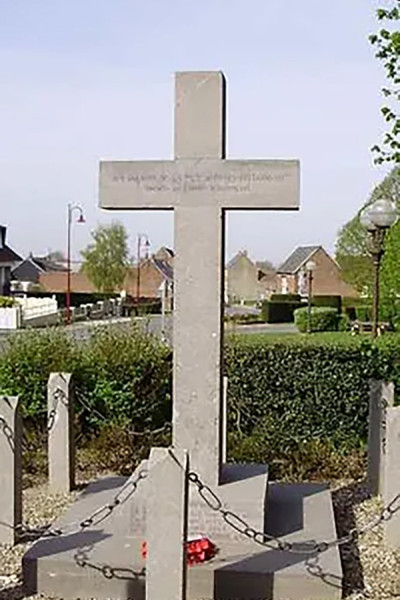
Albert was one of the earlierst volunteers, He arrived in France on July 15, 1915. His regiment was in action at La Boisselle on the Somme on July 3, when he was killed attached to a grande company. The leader of the action won the VC. Commemorated on the Thiepval Memorial.
.His family had come from Cheltenham and were living at the at the Unicorn opposite the church. He was a trainee blacksmith before joining up. His older brother Frederick, had been a boy soldier, and was killed in the earliest fighting of the war.
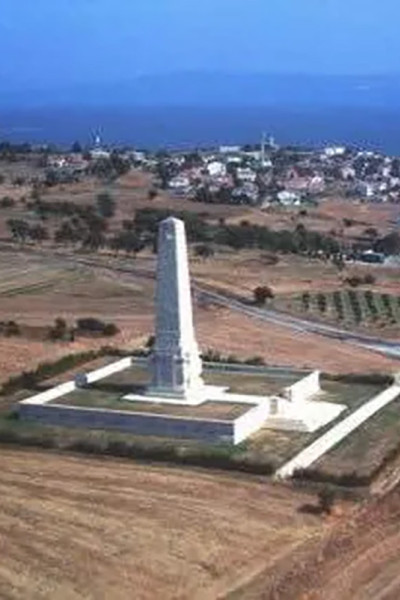
The Helles Memorial
The battalion left for Gallipoli in March 1915, and were involved in fighting during that summer, suffering heavy casulaties in the disastrous landing at Suvla Bay. Frederck Davis died on August 6, 1915, but like many men killed then, his body was not found and his parents were still trying to find news of him at the end of the year. He is commemorated on the Helles Memorial.
Frederick Davis was from a family of labourers, the youngest son of William and Eleanor and had lived in Hailes Street. In 1911 he had married Frances Hart, who remarried after the war.
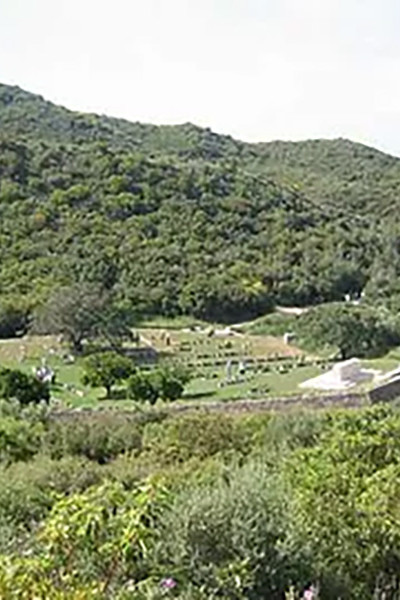
Shrapnel Valley Cemetery Gallipoli
Charles Day was killed in heavy fighting with the Turks near Steele’s Post above Anzac Cove at Gallipoli. He was described in a Red Cross report as having been shot in the back and the leg, trying to capture a Turkish trench. He was buried in the cemetery at Shrapnel Valley, at Gallipoli.
Charles Day’s father ran the George for many years, before moving into farming. Charles had served with the Royal Gloucestershire Hussars in Winchcombe for several years before emigrating to Victoria where he was farming. He was one of the first in Australia to volunteer perhaps expecting to fight on the front in France or Belgium, before the Battalion was redirected to Gallipoli.
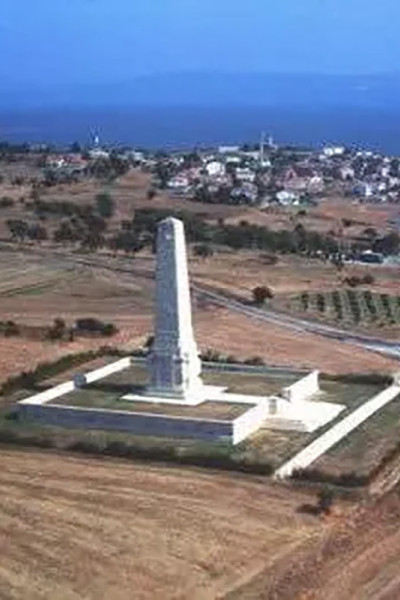
The Helles Memorial
George Fry was one of the Winchcombe men who left for Gallipoli via Alexandria in June 1915. After a few early engagements at Gully Ravine and Y Beach, they landed at Suvla Bayon August 6, to fight up to Sari Bair. With other Winchcombe men he died in fierce fighting on August 8. With the failure of the campaign and the withdrawal from Gallipoli at the end of the year, few bodies could be recovered. He is commemorated on the Helles Memorial and on a family grave in the cemetery in Winchcombe.
George Fry was born in Publow in Somerset, the fourth child of a gamekeeper. When the family moved to Sudeley Hill, near Winchcombe he worked with his father. He appears to have married before the war – a wife is listed by the Commonwealth War Graves Commission living in London after the war.
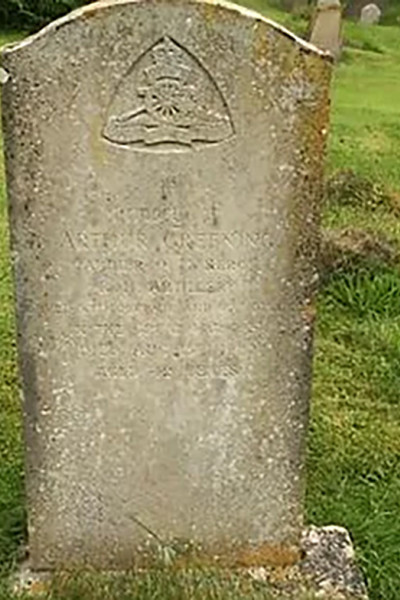
Arthur Greening was a professional soldier who had served for some years in India. At the outbreak of war he was sent back to Europe ,arriving I France on November 11, 1914. He fought throughout the war until Deember 1, 1917 he was seriously wounded and left disabled. Discharged from the army on December 24, 1918, he was cared for by his wife in Cheltenham and died in the Minstry of Pensions Hospital in Bath where he died on August 15, 1922. He is buried in Winchcombe Cemetery.
Jabez Greening and his family were badly affected by the agricultural depression and they all left Bull Lane in Winchcombe to find better employment. Arthur joined the army and rose through the ranks, serving in South Africa and India. He married Fanny Kearsey, whom he knew from home, in Bombay in 1911, and they had two daughters.

Charles Henney was conscripted into the Navy at the end of the war as he turned 18 but transferred into the newly formed Royal Air Force. He was sent to Tregantle Fort in Cornwall and then as fighting broke out in Ireland he was posted there. He worked as a motor mechanic. He died of unknown causes in the Renmore Military Hospital and was buried at Bohemore Cemetery in Galway, Ireland.
Charles Henney was the oldest child of Joseph and Dorcas Henney. Joseph’s father Charles, was an engineer who had come to Winchcombe to work at the paper mill, and the family became very involved over years with the work there. Charles, his brother and two sisters, lived at Postlip Cottages as children.
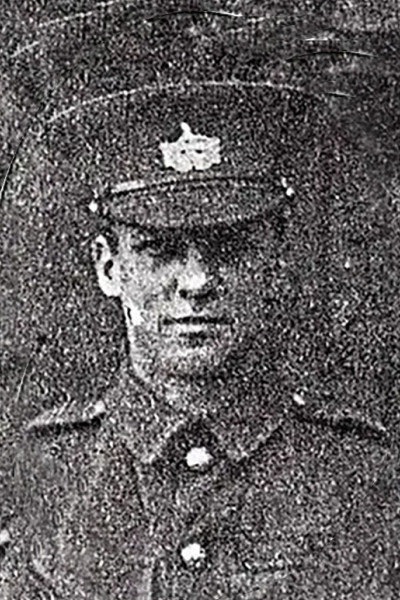

New Irish Farm Cemetery Ypres
The battalion had landed in France in March 1915, In 1916 they had taken part in the fighting in several parts of the Somme. The following year they were involved in fighting on the Ypres Salient. At the beginning of August 1917, they were relieving two other units near Langemark, under heavy shelling, the movement attracting the attention of the Germans. Robert Holmes was killed on August 6, when a shell hit his dugout.
Robert is buried at New Irish Farm Cemetery. A concentration cemetery with graves from other cemeteries.
He was one of the large family of (John) Thomas and Kate Holmes. Although they were married in Winchcombe, the Holmes seem to have been based later at Toddington and involved on the estate. Their cottage was very cramped. With seven children in the family. Robert and his older brother Hubert, worked as nurserymen.
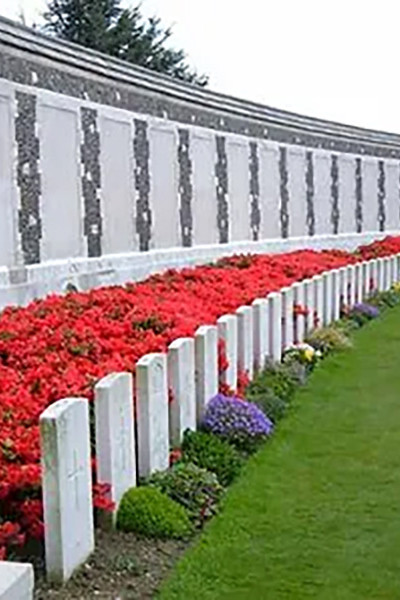
Tyne Cot Memorial
On August 21,1917, the 2/5 battalion were preparing for an attack east of Ypres, when they suffered a gas attack. The next day they launched an unsuccessful attack with other regiments on Pond Farm, suffering heavy casualties. It seems that George Jeffries was killed in this attack, but his body was not found or identified. He is commemorated on the Tyne Cot Memorial.
George was the oldest of six children of William Jeffries, who worked at the tannery, and his wife Emma who worked at the paper mill. They lived in Gloucester Street. After the death of their father in 1908, the family moved in with their mother’s parents. George was the main wage-earner then, working as a builder’s labourer. He married in Cheltenham in April 1916.
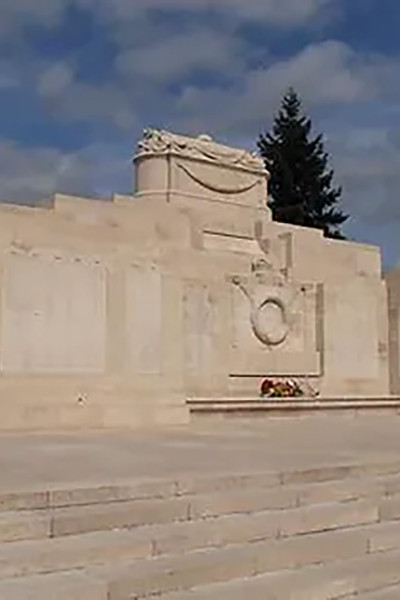
The Memorial at La Ferte-sou-Jouarre
On August 23, the British Expeditionary Force first met the much larger German forces on the outskirts of Mons. 119th Battery with Norfolks, Cheshires and Lancers faced a large force of the Elouges-Audregnies Road, on August 24, and were shelled with heavy losses, in an action first known as the ‘saving of the guns’.
Johnson was the first local man to be killed in the war, and is commemorated on the Memorial at La Ferte sous Jouarre, on the Marne.
John Johnson was the second of eight children of Annie and Isaac, living mainly around Worcestershire. Several of the children left home quite young, giving their mother as their next of kin. In 1914, she lived at the Close Stanley Pontlarge. John had trained as a blacksmith in his teens, joined the army in1906, and qualified as a shoesmith. Two of his brothers emigrated, one of them, Cecil, was also killed in the war.
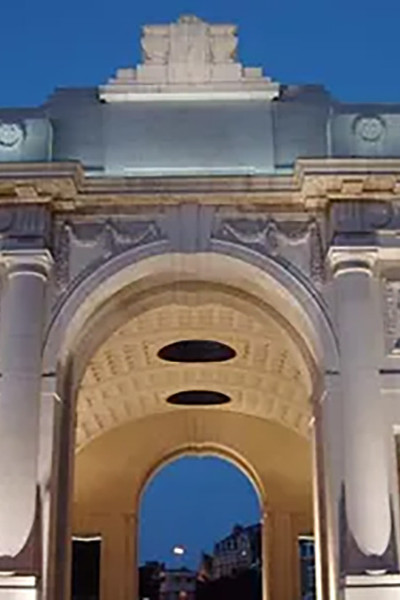
The Menin Gate Ypres
The 1/5 Gloucesters were part of the forces on the Ypres Salient planning to push the German forces back and regain the higher ground in the third battle of Ypres – Passchendaele. The offensive which began at the end of July 1917 quickly ran into wet weather, and then into mud. Tom King was killed in action on August 7, as attention was beginning to turn to the German lines at Langemarck.
His body was not found and he is commemorated on the Menin Gate.
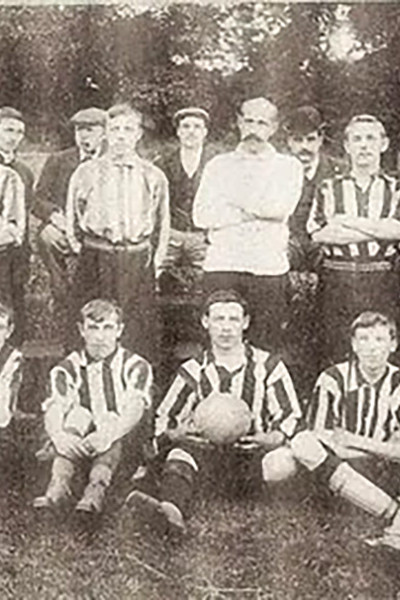
Tom King was the younger of the two children of William King, who worked at the paper mill and Jane, who lived in Gloucester Street. Jane died in 1904, Tom seems to have stayed at home, unmarried, after his much older sister Ann, had left. working at the tannery. He was a keen footballer.
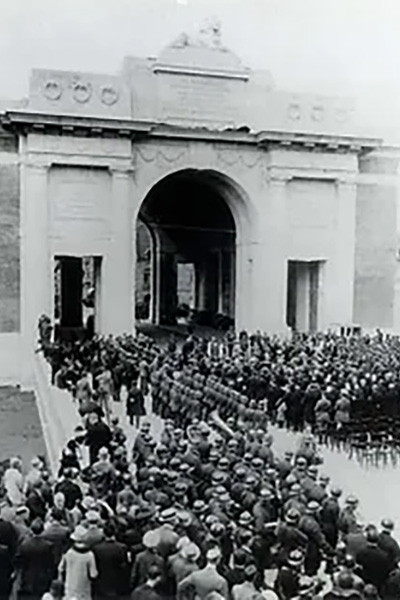
The unveiling of the Menin Gate - July 24, 1927
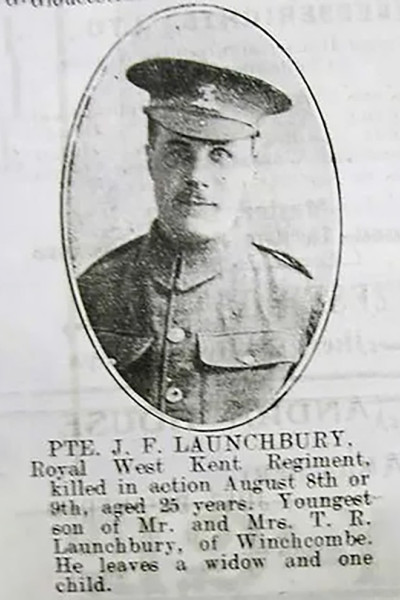
The Battalion was taking part in the Third Battle of Ypres (Passchendaele) which began at the end of July 1917, to break through the German lines on the high ground around Ypres. Frederick Launchbury was killed in the early days of the fighting He is commemorated on the Menin Gate
Frederick was the younger son of Thomas and Jane, who had moved several times during their marriage, and had lived in Cheltenham before moving to Gloucester Street in Winchcombe. He family had been involved in shop work. And Frederick was working as a dealer as well as a photographer. He had married in Cheltenham in 1915 to Ellen Taylor and had a son, Thomas, in 1916.
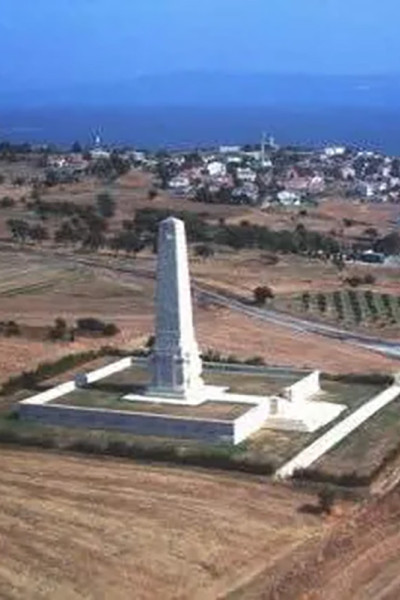
The Helles Memorial
The 7th Gloucesters landed at Y Beach at Gallipoli on July 11, withdrew to Mudros and returned to Gallipoli , fighting alongside New Zealand and Australian soldiers towards Sairi Bair and Chanuk Bair. With no time to dig trenches and under heavy fire, the battalion suffered extremely heavy losses with over 300 casualties dead , wounded or missing. Arthur had been with his cousin – a friend who searched for them after the fighting wrote to Arthur’s father said he his cousin had been seen together under fire, but later could not be found. He is commemorated on the Helles Memorial at Gallipoli.
Arthur’s mother had died leaving his father, a quarryman, with five young children at home in Gloucester Street. Three older children worked, Arthur, at the paper mill as an apprentice paper maker.
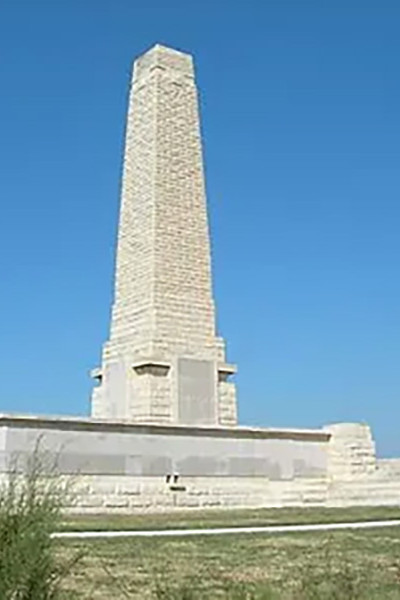
Edwin and his cousin Arthur,joined the 7th Gloucesters and other men from Winchcombe. They left England for Gallipoli in June 1915, and took part in the assault of early August at Suvla Bay over several days. It was disastrously mismanaged and the battalion suffered very heavy casualties. A letter sent later by another soldier described seeing the cousins together with others under fire when Edwin was already probably dead .He died on August 11, 1915, and is commemorated on the Helles Memorial.
Edwin Major lived in Gloucester Street, the son of John and Emma Major. Most of the family worked as labourers, but John Major worked as a gardener for a time, perhaps at Sudeley, and that may have been how Edwin came to work there as a hall boy, the only local indoor servant.
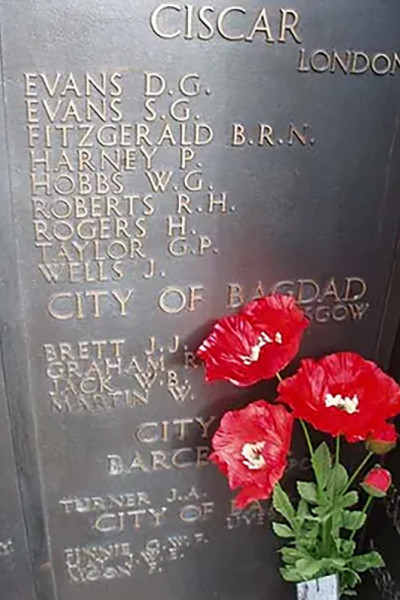
In August 1941, the Ciscar was part of Convoy-71, sailing from Bristol to Gibraltar.
Twenty three merchant ships, escorted by two destroyers and six corvettes were spotted by a Focke-Wolff FW on August 17 then attacked by U-boats. The Ciscar was torpedoed, on August 19, seen by one of Rogers’ sons on another ship. The convoy was again attacked, with heavy loss of life. Some of the ships took refuge in Lisbon. He is commemorated on the Seamen’s Memorial on Tower Hill, London.
Harry Rogers was a married man from London, who had settled in Winchcombe with his wife and seven young children. His family remained in Winchcombe.
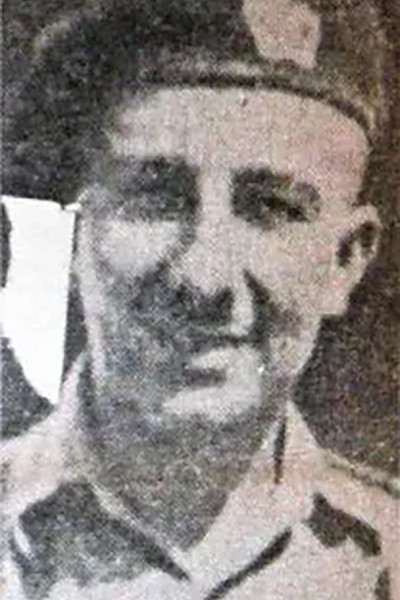
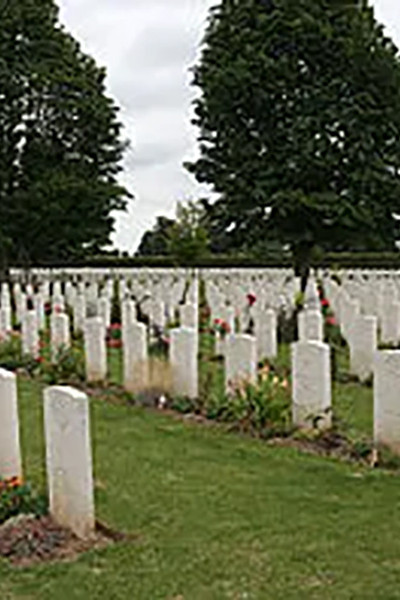
Sgt Webber was leading A Squadron of the Hussars, as the troop officer was already wounded. In advance of a large force. After the D Day landings, Allied Forces were trying to push German forces back and out of Normandy, beyond Bayeux. He was killed in action on August 8, 1944. Sgt Webber is buried in the huge military cemetery at Bayeux, although this is a concentration cemetery, so the exact place of his death is not certain.
Hubert Webber was born in Bristol and sang as a choirboy in a church there, and in All Saints Cheltenham before joining St Peter’s in Winchcombe. His family lived at 8, Cheltenham Road. For a short time he worked at Saxone Shoes, before joining the army, serving in the middle East for three years and then taking part in the D Day landings.
The memorial and cemetery at Vis-en-Artois
William Fry appears to have been assigned to the Lancashire Regiment when numbers had been seriously depleted at the end of fighting at the Somme, when he turned 18 in 1917. In the last hundred days of the war, and the allies fought to retake ground from the Germans at the Somme, William Fry died in fighting between Albert and Bapaume. but is body was never identified. He is commemorated on the Memorial at Vis-en-artois.
His parents Joseph and Amelia lived in Greet and William went to Gretton School. He left in 1913 to find work, probably in labouring like his father. He wold have been conscripted as soon as he was 18.
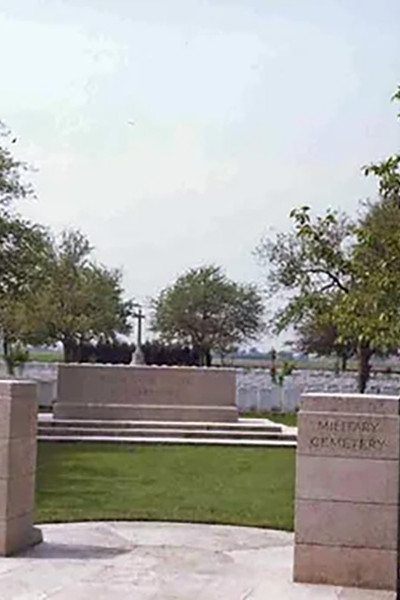
Pont du Hem Cemetery, La Gorgue
The 2/5 Gloucesters were a territorial division, and were not initially sent to France after training. They left for France in the spring of 1916, and took part in the disatrous battle at Fromelles in July, suffering heavy casualties. John Lafford was killed after the main fighting there, on September 9, and buried at La Gorgue du Hem, a concentration cemetery then behind Allied lines.
John Lafford was the son of Agnes Lafford and was brought up his unlce William, a carter near Fairford. He had come to work in Winchcombe and joined up with other local men.
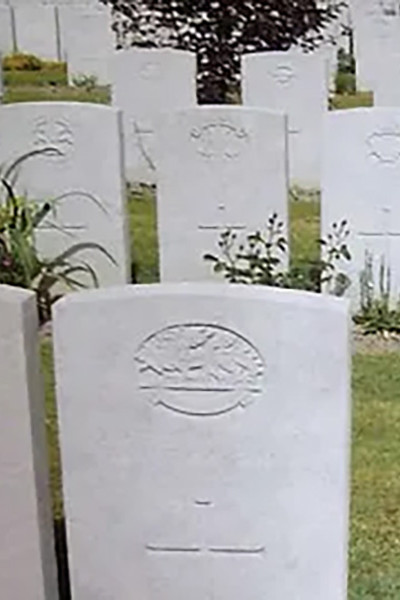
Harry Doughty's grave at Ljissenhoekone of the largest cemeteries.
This Battalion was a territorial unit, which was sent to serve in France as part of the South Midland Division. They took part in the third battle of Ypres, (Paschendaele) in terrible weather in the early stages of the fighting around Westhoek. Harry Doughty was wounded in the fighting and died on September 1, 1917. He was treated, and then buried, at the Casualty Clearing Station at Ljissenhoek.
Harry was the oldest of seven children of John Doughty, a carpenter from Stanton. Harry worked as a labourer. He was married with a young son and was living in Gretton when he left for the war.

Anneux Cemetery on the Bapaume-Cambrai road
Charles Gardner joined the army after two years training as an accountant, and was selected for training for the Machine Gun Corps, which was founded in October 1915. Charles Gardner took part in three days of fighting to gain control of the Canal du Nord near Cambrai. He was killed by a shell on September 30, 1918. His CO wrote to his parents that his body had been recovered, and is now buried in Anneux Cemetery.
Charles Gardner's father was the town sanitary inspector, and also surveyor during the war. The family lived at Oaklands in the Gretton Road. One of five children, Charles went to Cheltenham Grammar School, and joined the army after passing his intermediate accountancy exams. His sister, Sheila, a teacher, died in the 1918 flu epidemic a month after her brother.
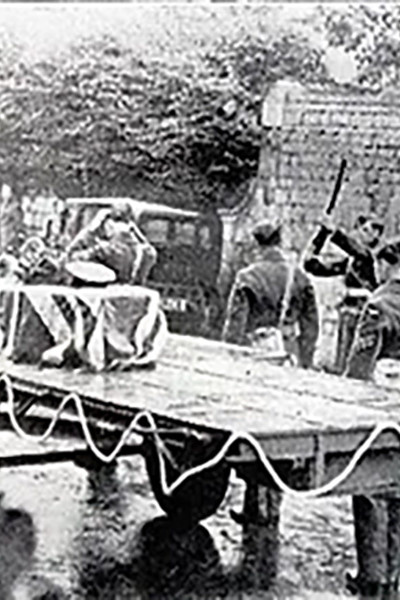
John Punphrey's funeral with military honours, October 3, 1940
John Pumphrey volunteered at the outbreak of the Second world War and was selected to train as a pilot. He was based at South Cerney and was killed in a flying accident on September 29, 1940, days before his 21st birthday. He was given a military funeral at St. Peter's and was buried in a family grave in the cemetery.
John Pumphrey was one of six children, whose family eventuallty kept a fish and chip shop in North Street. He was a long term member of the church choir and had gone to Cheltenham Grammar School, before going on to St Paul's College. He was an early vounteer for service, and pased for flying training.
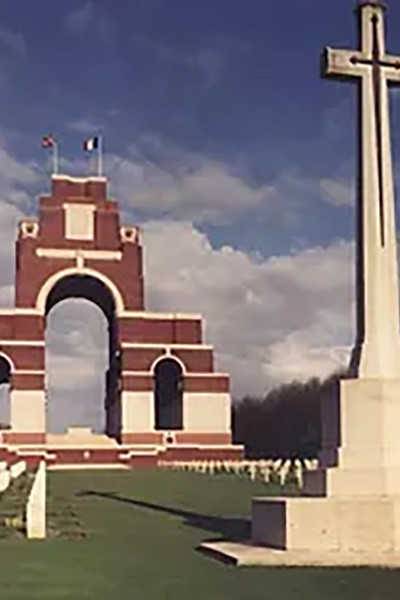
Thiepval Memorial
Edward was listed at St Peter's as an early volunteer to the 2nd Battalion, which fought in Flanders in 1914-5 A letter from his family said was wounded when a shell hit his dugout, and did not return to the 2nd Battalion, in Greece, and was posted to the 12th, when he was killed during the fighting at the Somme, probably near Guillemont on September 3, 1916. He is commemorated on the Thiepval memorial.
Edward Restall was one of four surviving children of William Restall, and Mary Ann. They lived in Gloucester Street. Before the war, he was the last child at home. He and his father were working as plasterers.
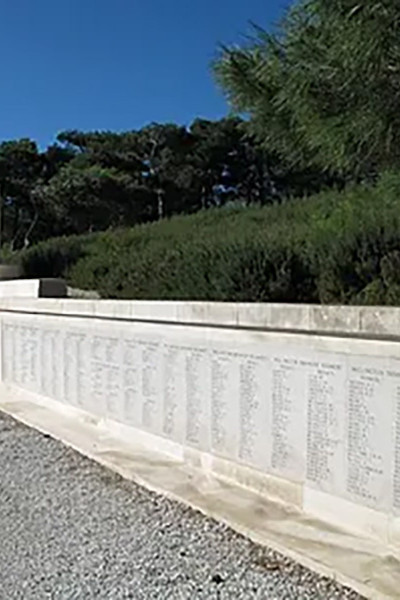
The Memorial at Chunuk Bair
Alfred Smith had emigrated to New Zealand and had volunteered to join the one of the Otago regiments joining the New Zealand Expeditionary Force in 1914. They left for Europe in October 1914, but were diverted to the Middle East where they joined forces with the Australians in fighting at Gallipoli. in April 1915. They took part in various actions, including the attack on Sari Bair during which Alfred Smith was assumed killed in actionon August 6 or 7. He is commemorated on the memorial at Chunuk Bair, Gallipoli.
Alfred Smith was born in Winchcombe in 1887. one of five brothers. He had served in the Gloucestershire Territorials before emigrating to New Zealand where he worked as a mental hospital attendant. His parents, Thomas and Sarah, appear to have lived at The Farm with boarders and servants in 1901, his father being described as a road surveyor.
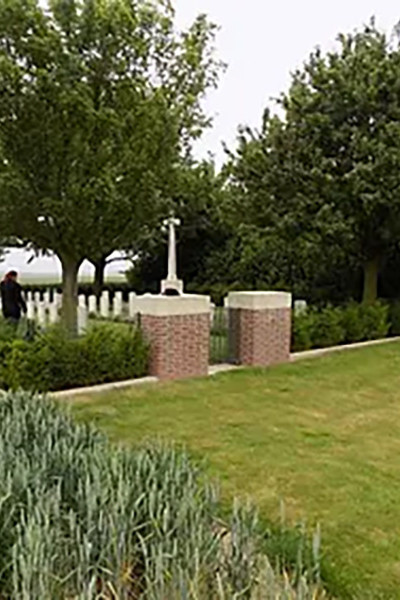
Beehive Cemetery, Willerval, on the site of a German machine gun post.
Job Stephens joined the newly formed 14th Worcesters with his friend from Gretton School, Harry Lane, in 1915, when they were both 18. They arrived in France in June 1916, and were involved in heavy fighting towards the end of the battle of the Somme.
In 1917, the battalion moved to the area around Arras. By September the fighting was less severe, and Job Stephens was probably killed by a sniper or shell fire. He was buried at the Beehive Cemetery at Willerval.
Job was the fifth of nine children. His father William was a carter, his young mother, Ellen, the daughter of a shepherd. After William's death in 1906, his oldest brother, at home, Jesse, helped support the family at home. Job left school at 13, and worked a grocer's delivery boy. An older brother, Edgar, was killed in April 1916.
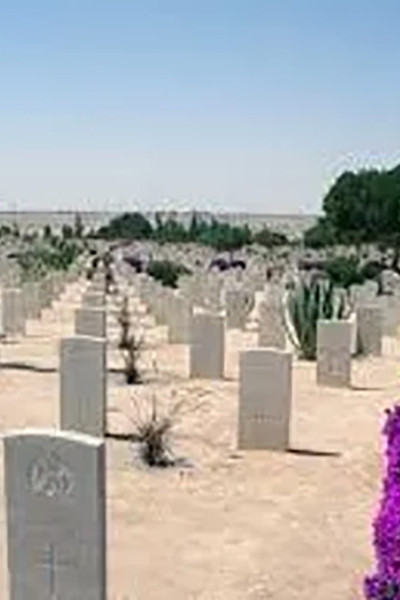
The cemetery at El Alamein
Field Squadrons were attached to infantry units to provide specialist support. In the summer of 1942, the first battle of Alamein had succeeded, with heavy losses in halting the Axis advance on Alexandria. Fighting in the area continued with the aim of succeeding in a second battle and William Bartlett was killed during this preliminary phase. An important part of their work in the desert was clearing mines for other troops but the circumstances of Sapper Bartlett's death on October 8 1942 are not known. He is buried in the Alamein War Cemetery.
William Bartlett was the son of Rose Bartlett, who had probably been working at the paper mill when he was born in 1915. Rosa married when William was still a child. He married Dorothy Davis in 1935, and they had a daughter Lola the following year.
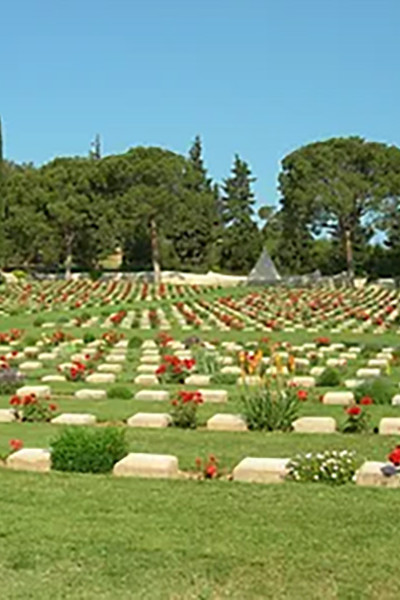
Karasouli Military Cemetery
An early recruit to the 9th Gloucesters who arrived in France in September 1915 after training in the Cheltenham area. The battalion was sent to Greece in November that year to the Salonika Front against a largely Bulgarian army. Wincel Cleeg was killed on October 3 in the Vladaja Ravine as under heavy artillery fine and 'whizz bangs' , as the Gloucesters had relieved the 7th Berkshires in thunderstorms, attracting enemy attention. Unusually for a private, is death was recorded in the unit diary. H is buried at the Karasouli Military Cemetery near Polikastron in Greece.
Wincel Clegg was born in the Winchcombe workhouse, the son of Louisa Clegg. He must have spent time in the workhouse and the Guardians sent him the training ship Warspite as a teenager, but he returned to work at Stanley Pontlarge, where he is also commemorated.
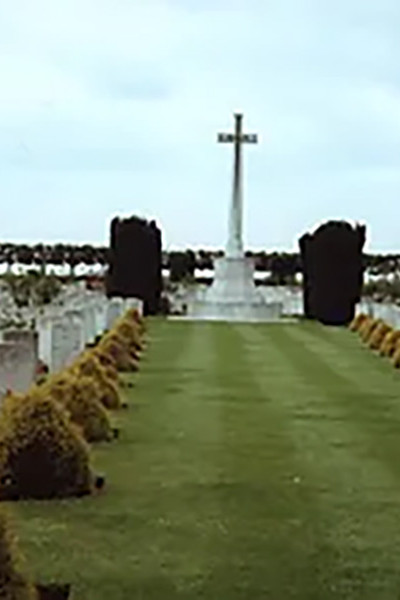
Duisans Military Cemetery
Reginald was born in 1899 nnd was not eleible for service until he was 18, which makes it all the more remarkable that he had reached the rank of sergeant.The 1st Worcesters were heavily involved in the fighting of the Spring Offensive to repulse the German advance in 1918 and Reginald Conn was fatally wounded and died on October 14, in one of the Casualty Clearing Stations there. He is buried in the Duisans Cemetery near Etrun.
Reginald was the oldest son of William and Martha Conn who moved from Vineyard Street to North Street before the war. Martha had already lost a brother and a nephew.

Kortrijk Communal Cemetery
Noman volunteered early in the war and was in France in January 1915. in 1916, the 140th Field Ambulance Unit was attached to the 41st Division fighting on the Somme and at Paschendaele before being sent to Italy in November 1917. They returned to France in March 1918 taking part in the final push to drive the Germans back in Flanders. Norman Curtis was wounded in fighting to dislodge German forces from Courtrai, and died on October 25, 1918. He was buried in the Kortrijk St Jan Communal Cemetery.
The Curtis family moved to Winchcombe from Herefordshire, then Malmesbury, by 1901. William Curtis ran a clothiers shop in the High Street. Norman helped his father and later went to help a widowed aunt at her draper's shop in Glastonbury.
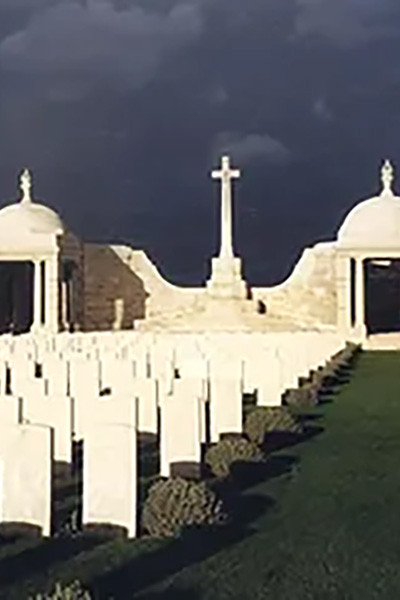
The Loos Memorial and Cemetery
Ernest volunteered for the army at the beginning of the war and after training was sent to France in August 1915. The first big engagement of the 10th Battalion was at Loos, where the huge flat battlefield was overlooked by German troops on the huge coal tips. Ernest was killed in action on October 15, 1915, but his body was not found. He is commemorated on the Loos Memorial at Dud Corner.
Ernest was one of the older children of Charles Stewart, a carpenter, who lived on the Cheltenham Road. He originally helped his father but then moved to Strood in Kent where he worked at a military ammunition magazine, possibly at Cliffe or Chatham. He married Hilda Hopkins at St John's Cheltenham in February 1915.

The Menin Gate with more than 54.000 names unveiled 1927
The 2nd Worcesters were among the first units to be sent to France at the outbreak of war in August 1914. They were involved in the heavy fighting around Mons, and took part in the retreat towards the Marne. The Worcesters were engaged in halting the German advance on Ypres. Frederick Evans was killed in the heavy fighting there on October 24, 1914. He is commemorated on the Menin Gate.
Frederick Evans was born in 1886, the oldest of three sons and two daughters of William and Mary Evans. William was then a labourer, and the family later moved to Guarlford and then by 1911 to Coventry as William got more regular work. Frederick married and was working as a postman, but appears to have also been a reservist, called up on the outbreak of the war.
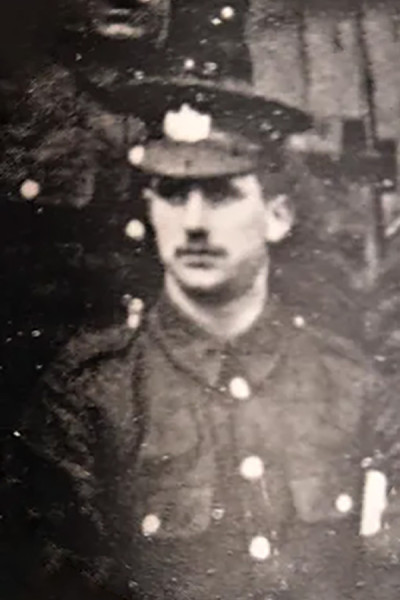
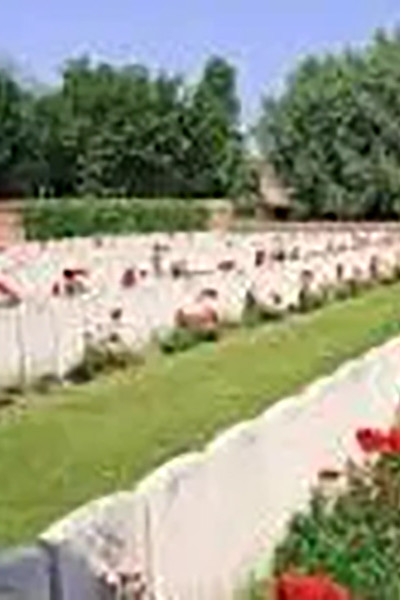
Poperinge Old Military Cemetery
The 1st Gloucesters were among the first troops to land in France and engage the Germans at Mons in August 1914. Walter Fisher was reportedly injured by an exploding shell at Mons, but could continue on the retreat to the Marne and then continue fighting at Ypres. He was wounded and died in a Casualty Clearing Station , or possibly killed killed in the fighting near Langemarck and buried in the Poperinge Old Military Cemetery, just beyond the area of fighting, on October 25, 1914.
Walter Fisher was reservist and corporation employee from Gloucester who had married Eliza Musty, a local girl, in April 1914. She went to stay with his family in Gloucester, where she gave birth to a daughter Lilian shortly before he left. He was remembered at St Peter's just after his death.
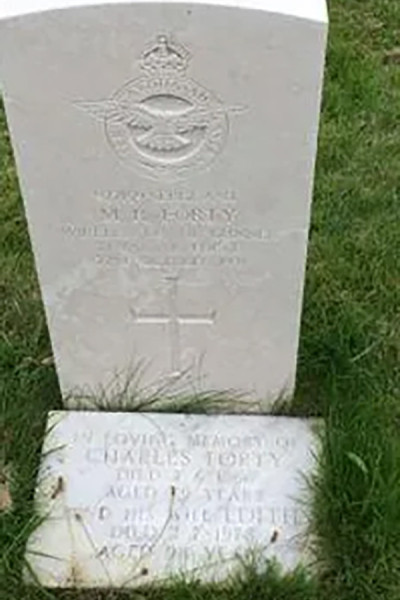
!2 Squadron was engaged in fighting from the beginning of the Second World War, flying Fairey Battles over France in 1940, and on their return to England in June via Finningley and then Binbrook. The squadron was then equipped with Wellington bombers. Ronald Forty was a wireless operator/air gunner in a crew of six, flying on a raid to Bremen on October 22/23 October 1941. Their plane crashed on landing on a row of married quarters, killing all except the rear-gunner. Ronald Forty was buried in Winchcombe Cemetery.
He was the younger son of Charles and Edith Forty, who also had three daughters. They lived at Coates Mill House for some years. Charles Mowbray had been a coal merchant and later turned to farming.
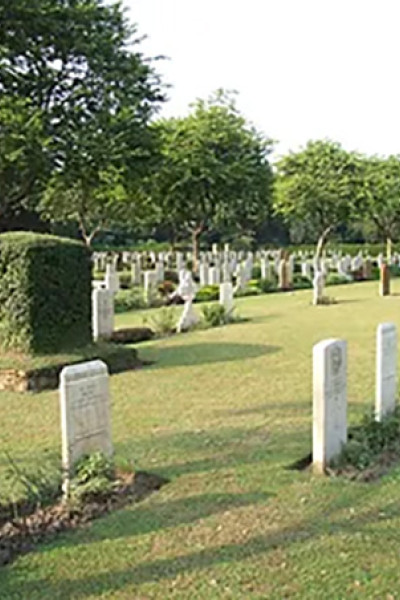
Bhowanipore Cemetery Calcutta
Henry Hall had been commissioned in Kent but in 1910 was seconded to the North Borneo Civil Service. In After numerous attempts to rejoin his old regiment, he succeeded in 1917 and went back to India., where he died in the influenza epidemic on October 24, 1918. He is buried in the Bhowanipore Cemetery in Calcutta.
Henry Hall's connection with Winchcombe is tenuous. His father was a miller and grain dealer from Stroud, but the family lived in Hastings. Henry's father Joseph,appears to have retired to Winchcombe and lived in Glenbrook. He died in 1907 leaving his affairs to Ernest Smith Wood a local solicitor. Henry had left to teach at Ashford Grammar School in Kent. He then joined the army as a regular soldier, His name appears to have been added to the Winchcombe memorial at the request of his family, who were then once again based in Hastings.
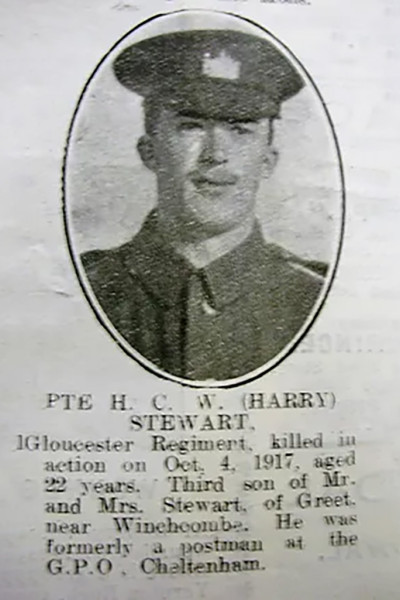
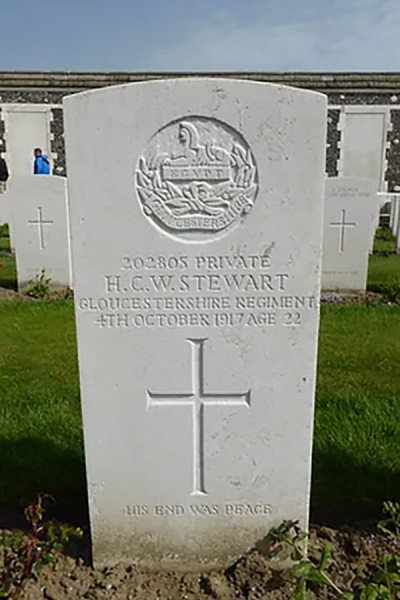
The 12th Glosters arrived in France in November 1915, with the 32nd Division, but it is not certain when Harry Stewart joined them. The Division took part in much of the fighting on the Somme before pursuing the Germans in the retreat to the Hindenburg Line in 1917. They were then involved in the Third Battle of Ypres - Paschebdaele. The Battalion was in the front line at Gheluveldt and then withdrew to Sanctuary Wood with heavy casualties. Harry Stewart was killed during this fighting on October 4, 1917 and is buried in the cemetery at Tyne Cot , Ypres
Harry Stewart was the second of the seven children of a carpenter, Fred Stewart, who lived next door but one to his father, Charles .on the Cheltenham Road. On leaving school, Harry went to work as a telegram messenger boy for the Post Office.

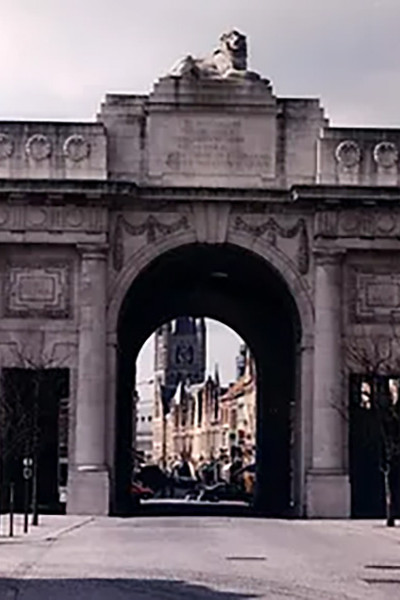
The Menin Gate
The First Gloucesters were among the first units to land in France in August 1914, and engage the enemy around Mons. The small British Expeditionary Force was heavily outnumbered and forced to retreat fighting to the Marne, where the German advance was halted. They were then sent to halt the German advance in Belgium at Ypres. In confused fighting and before systematic recording of casualties, Walter Howe , killed in action on October 20, was not found or identified. He is commemorated on the Menin Gate.
Walter was a regular soldier who had also served on Malta, one of seven children. His father, Thomas was a farm worker, and had moved several times. When war broke out the family was living at Farmcote, and several of the other children were working on local farms.
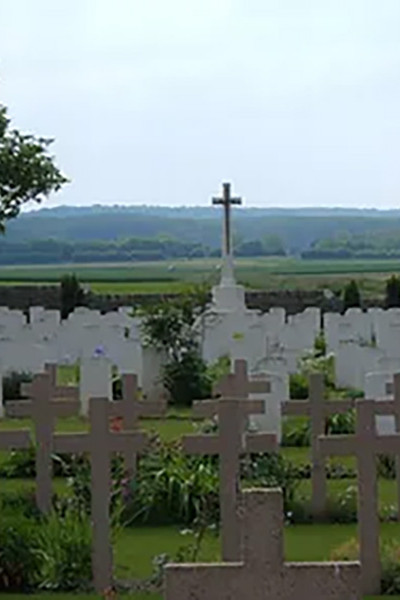
Tranchee de Mecknes Cemetery with French and British graves
Thomas joined the 11th Battalion first formed in 1914. When tranied they joined the 37th Division and were sent to France in July 1915. after being inspected by George V. Their first big engagement was during the Battle of the Somme, when they fought in deteriorating weather along the river Ancre, and on the Transloy Ridges. He was killed on October 1, 1916, and buried in the Cemetery of Tranchee de Mecknes, begun by French Moroccan troops, and taken over by the British in 1916.
Thomas Jeffries was born in Winchcombe in 1892 on of eight children - his family lived in Gloucester Street. He left home to work as a pork butcher in Huddersfield and lived in digs, but returned south to join up.
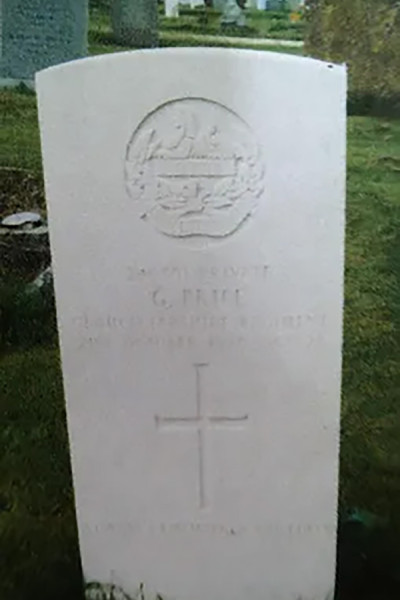
George Price had volunteered with others in Winchcombe early in the war and arrived in France early in 1915. They were involved in fighting on the Somme, which may have been where George Price was seriously wounded. He became paralysed and was discharged from the army on April 4, 1917. He was admitted to the St Martin's Home in Cheltenham, which had previously been used as a hospital, and remained open after the war to care for paraplegics. Early care for such injuries was virtually non-existent and it was assumed that patent's life expectancy was very short. George Price died on October 25 1920, aged 23, and was buried in Winchcombe Cemetery.
George Price was the son of a shepherd, originally from Twying. Like many farmworkers he had moved jobs several times, and George, one of the younger children, was born in Oxenton. and at 14 was also working on a farm. At some time during the war, the Price family seems to have moved into Winchcombe, possibly to Gloucester Street.
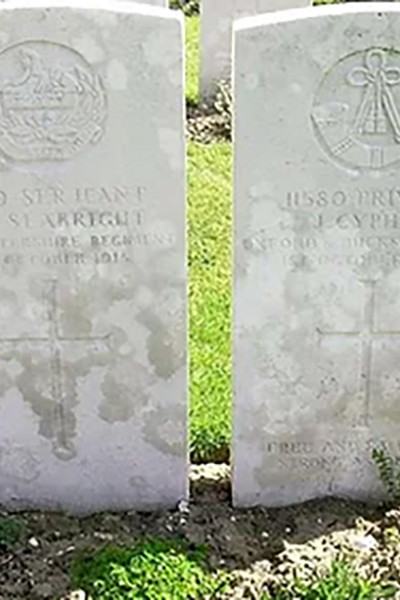
John Seabright's grave at Etalples
John Seabright was a regular soldier, and served as did at least three of his brothers. before the war he was first with the 1st Gloucesters. They arrived in France in December 1914 and were involved in the retreat from Mons, the Battle of the Aisne and the defence of Ypres. He suffered frostbite and was hospitalised but returned to the front sent to the 10th Battlaion. In October 1915, he was wounded in fierce fighting at Loos, on September 27, but on October 1 died of wounds in the hospital at Etaples, where he is buried.
John Seabright was the sixth of twelve children of a farm labourer, who lived in Gloucester Street. At fourteen he had gone to work in the mines of South Wales, but left to join the army. As a corporal he was based at Portsmouth, and had be promoted again to sergeant before he died.
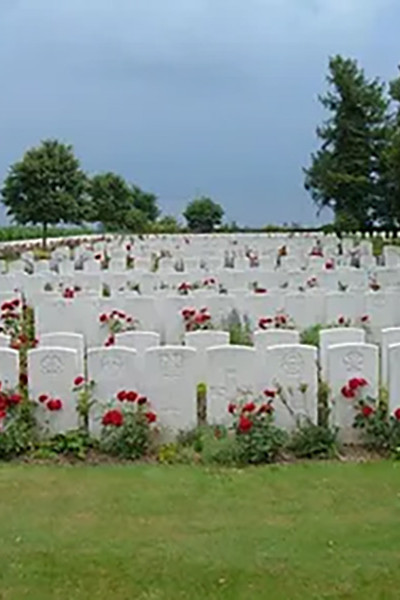
Le Cateau Military Cemetery
Edwin Shillum's name appears in the first part of the list of men in St Peter's Church joining the 2nd Battalion which landed in France in 1915 . They were quickly sent to fight in Greece. At some stage he was transferred to the 9th Battalion which returned to France in September 1915. In October 1918, pushing forward from Amiens to take Le Cateau, held by the Germans since 1914, the Allies were successful. Edwin Shillum was killed in continued fighting in the area, on October 27, 1918 and is buried in the Le Cateau Military Cemetery.
Edwin's father, also Edwin, was a cowman on the Sudeley estate when Edwin was born and the family lived in Vineyard Street when Edwin was a child. He seems to have attended the local boys' school and may have moved to Cheltenham to work before joining up.
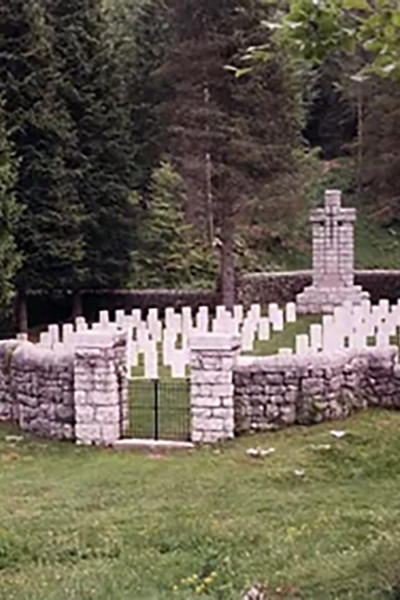
Granezza Military Cemetery
The 1/4 Battlaion lnaded in France in March 1915, and took part in many of the battles on the Somme in 1916. They were moved to Italy in 1917 and during 1918 fought in some of the final battles on the Asiago and then Vittoria Veneto. William Styles seems to have been killed in the fighting between these two major offensives, on October 24, 1918., against units of the Austro-Hungarian army. He was buried in the cemetery at Granezza on the Asiago Plateau.
William Styles was probably a railway man who had originally lived in this area, but who later married and was living in Leeds. His name does not appear on earlier lists in Winchcombe, which suggests he returned to the area to work on the railway and then joined the local regiment.
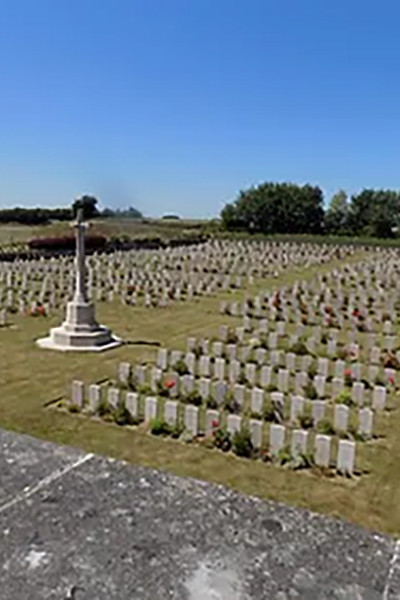
Bienvillers Military Cemetery
Royal Garrison Artillery batteries manned heavy guns and howitzers with a number of men manning them. this unit was probably mechanised rather than relying on horses. George Taylor would have been in France from at least 1916, and killed in heavy fighting on October 11, 1916, when the position of the group of guns would have been obvious to the enemy who would counter attack. He was buried in the Bienvillers Military Cemetery.
George Taylor was originally from Holt in Worcestershire but appears to have come to the Winchcombe area with his wife Alice before the outbreak of the war, and is remembered in Gretton. After his death his wife returned with their child to Hartpury.
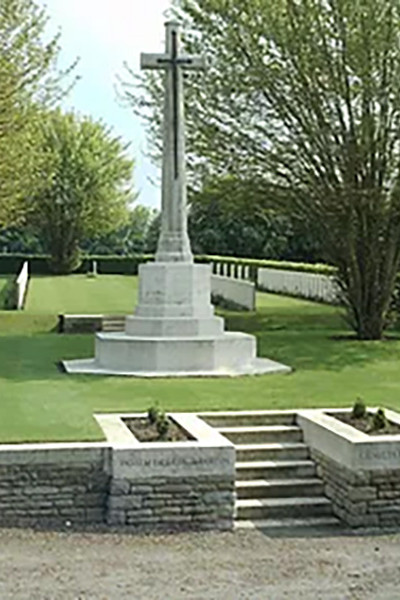
Bienvillers Military Cemetery
Hubert enlisted early in the war in the Somerset Light Infantry,but seems quickly to have transferred for training with the Machine Gun Corps, an elite corps formed in October 1915 and disbanded after the war. He landed in France in May 1915, but was probably returned to England for specialist training within months. He was killed in fierce fighting around Pommereuil to capture the village on October 23, 1918 , and was buried in the cemetery there.
Hubert was the son of the Winchcombe Relieving Officer, who had several other posts, and had come to the town from Bristol. They lived in North Street, and Hubert worked with his father. He was also a member of the local football eam.The family retained some links with the West Country, and Hubert had marrried May Balmond in Axbridge at the beginning of the war. They had had a son before he was killed.
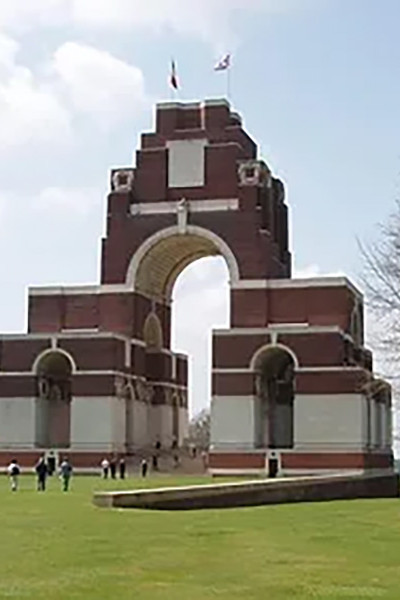
Thiepval Memorial
The 8th Gloucesters were involved in the last stages of the Battle of the Somme in cold wet weather, moving from near Orvillers towards the notorious Schwaben Redoubt . Frank Butler was killed n fighting with artillery, gas shells and snipers on November near Grandcourt. He is commemorated on the Thiepval Memorial.
Frank was the fifth child of postman Ernest Buler and his wife Lilian, who ultimately had 16 children. They lived in Hailes Street, and later Coates Mill. Ernest later became a gardener and Frank, who left school at 13, worked with him as a gardener's boy. He volunteere for the army in 1915, aged 18. There is some confusion over the details of his death.

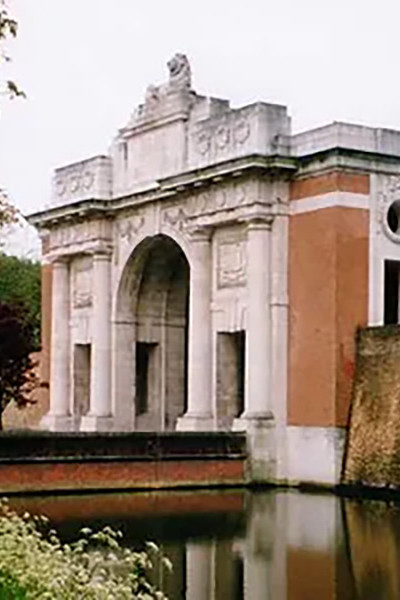
The Menin Gate Ypres
The 1st Gloucesters were among the first to land in France in 1914, fighting around Mons before the retreat to the Marne . They then moved to Ypres, involved in continuous fighting until November, Arthur Clements died near Herontage Wood, on November 4,1914, before any systematic recording of casualties. He is commemorated on the Menin Gate.
The Clements family were farm labourers, who had worked on several farms. Arthur Clements was married with two children and living in Didbrook, when the war started.

Emma Green’s missing memorial cross
Percival volunteered in July 1915, and after training arrived in France in May 1916. His unit was involved in the Battle of the Somme from July and took part in the second attempt to take Beaumont Hamel in November between Frankfurt Trench and Munich Trent in fierce fighting. Some men were separated behind German lines, and the date of Percival's death is unceratin - November 10 or 14, 1914. He is buried in Frankfurt Trench Cemetery, formed by Corps V Collecting and buryin the dead.
Percival had moved to Llansamlet to work on the railway. Their second child died shortly before him, Lilian was forced to ask for help to buy mournng clothes, and visit her widowed mother-in-law in Toddington. His mother's little memorial has quite recently been stolen from the churchyard there.

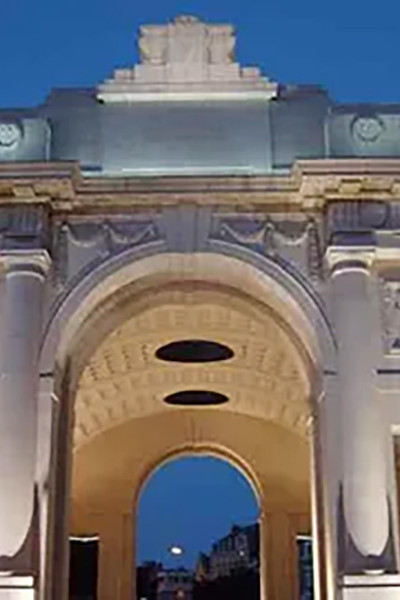
The Menin Gate
The regiment arrived in Belgium involved in fighting and exhaustive marches before arriving at Ypres, which the Germans were trying to take.They were still involved in daily conflict with often heavy fighting and chaotic organisation, suffering regular losses in cold wet weather. They were involved in the vital battle at Gheluveldt to keep the Germans from taking the city at the end of October - Fred Whittingham was killed on November 1, 1914, just as this phase of the fighting came to an end. He is commemorated on the Menin Gate.
Fred Whittingham had been a boy soldier , who joined as messenger at 14, when his parents were living in Cheltenham. He served in England until 1909, when he was 19, then served in Gibraltar and South Africa. He was allowed a week at home in September 1914, by which time his family had moved to the Unicorn in Winchcombe.
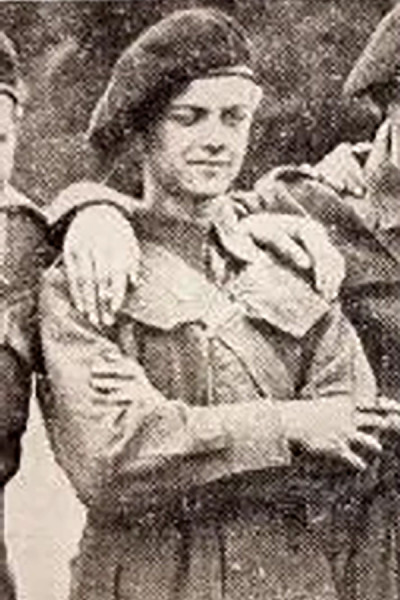
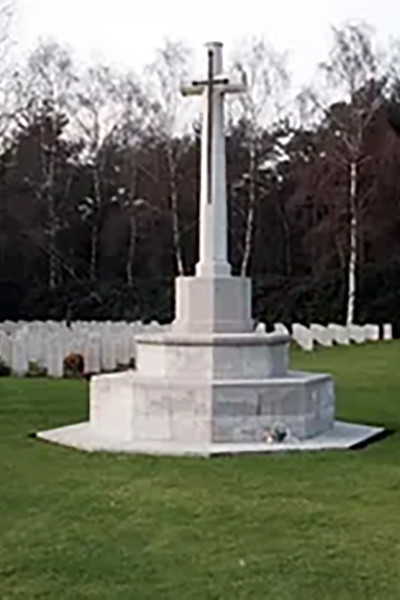
Mierlo Cemetery, Holland
The Argyle and Sutherland Highlanders had taken part in the D Day landings and had taken part in fighting across Belgium and Holland towards the River Maas. John Wiggett was killed in an accident on his motorbike as he returned to HQ on November 26, 1944. He was buried in the small cemetery at Mierlo, in Holland, where Dutch children were reported to have brought flowers.
John Wiggett was born in 1924 to Harold Wiggett and Grace Wiggett (nee Oakey, the younger sister of Walter Oakey, who died in the Great War (see separate entry). John Wiggett was the elder brother of Harold Walter Wiggett.
Prior to World War 2, John Wiggett worked at Sudeley Castle as a gardener, alongside his father and brother.
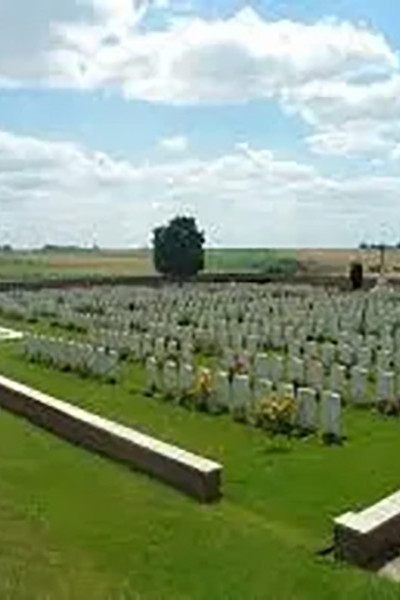
The Cemetery at Sailly-Saiselle
The 1st Battalion was based near the Beaumont Hamel at the beginning of the battle of the Somme and continued during the fighting to the end of the battle where they were on the Transloy Ridges in very poor weather . Harry Brown was killed on December 22, 1916 in that area. He is now buried in the concentration Sailly-Saillisel Cemetery between Albert and Bapaume.
Harry Brown’s family lived in Gloucester Street, one of a number of children of a labourer. He left to train as a gardener at Rotherfield Park near Alton in Hampshire, sharing a cottage with the foreman and another ‘improver’ gardener on the estate.
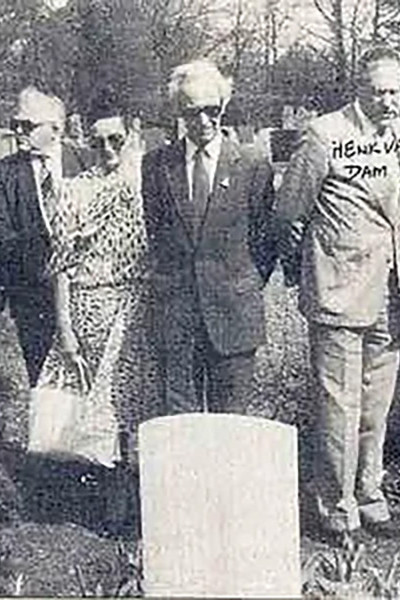
Dutch helpers at Tony Carter’s grave at Schoonebeek
Anthony Carter was the navigator/bomb aimer in a four man crew of a Hampden bomber, ZN-F/AE151 in 106 Squadron based at Coningsby. The plane took off at midday on December 21, 1941. for a raid on Oldenburg near Bremen. Tony Carter in the nose cone, was killed by a direct hit which crippled the plane. The pilot, Nick Hartgroves, could get over the Dutch border, where they crashed. Local Dutch people arrived to help, and they later buried Tony Carter at Schoonebeek. The rest of the crew were taken prisoner.
Tony Carter had lived with his parents at Duffryn on the Gretton Road. His father was an invalid who died during the war. Nothing more is known of them – all information came from the family of the pilot.
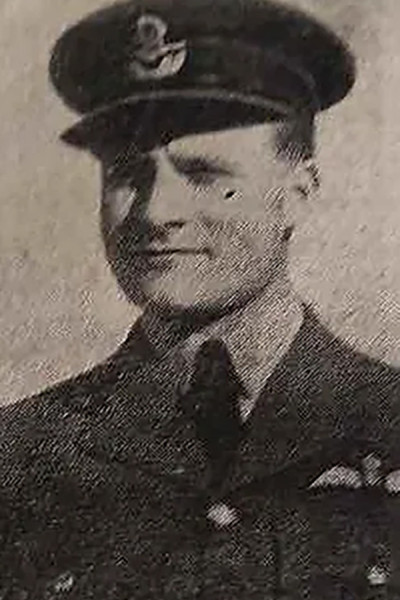
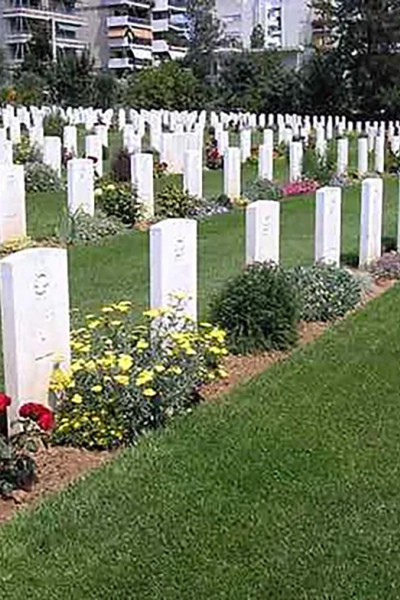
Phaleron Cemetery
80 Squadron was one of the last to be flying the Gloster Gladiator biplanes, and were posted to the Middle East before the war, and then moved to Greece when Germany invaded in October 1940. Samuel Cooper had already ben shot down at the beginning of December, but survived and returned to flying after a break at Larissa. On December 18 he was shot down again near Tepelene and fired on as he descended in his parachute. His squadron leader found him on the ground, but he died in hospital the next day. A street in Yanina is named after him. He is buried in the Phaleron Cemetery near Athens.
Samuel Cooper left Cheltenham Grammar School and eventually joined the Gloucesters, then trained for the RAF in Scotland after a brief period with the police. His younger brother, Geoffrey, also joined the RAF and was killed in 1941. The Coopers owned a shop in the High Street
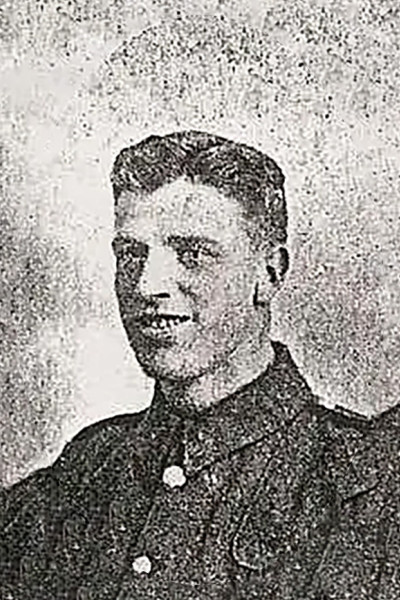
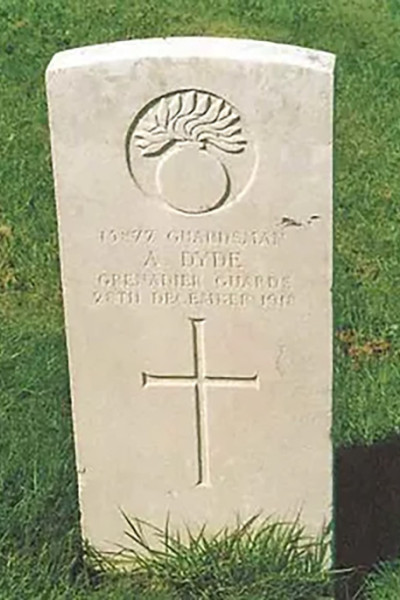
Alfred Dyde was among the first to arrive in France in August 1914, one of three brothers and a step-brother to do so. He would have taken part in the retreat from Mons, and fighting at the Marne before being sent to Ypres where he was taken prisoner. He spent the next four years in camps before being repatriated just after the war ended. He died on December 28 1918, a month his return home and is buried in Winchcombe Cemetery
Alfred Dyde’ father was a carter on a number of local farms, but the family had come to live at 4 Gretton Road. They comprised Alfred’s four brothers, a stepbrother, two stepsisters, and two more children from his father’s second marriage. Alfred worked as a labourer, probably at the George.
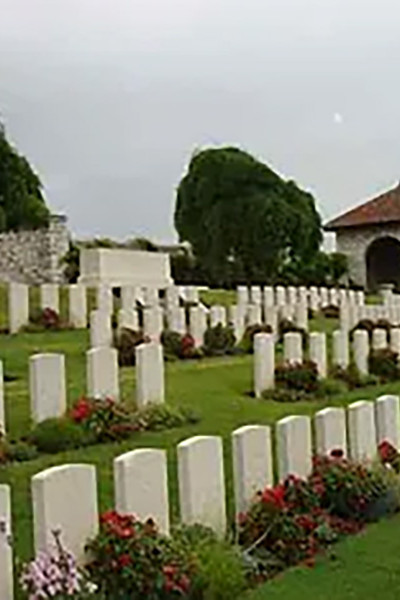
Montetecchio Precalcino
Ellis Griffin volunteered for the Royal Engineers as a carpenter in the spring of 1915, and fought at the Somme and Arras before being sent to Italy in 1918. After the battle against the Austrians at Piave he became increasingly ill with an infection probably acquired in the trenches, and was admitted to hospital. He died in hospital on Christmas Day 1918, and was buried at Montecchio Precalcino.
Ellis was the son of a labourer who later worked as horse driver. He was born in Greet one of four children, and had worked as a carpenter before the war. He had been keen to volunteer in 1914, but was prevented by illness, and volunteered as son as he could
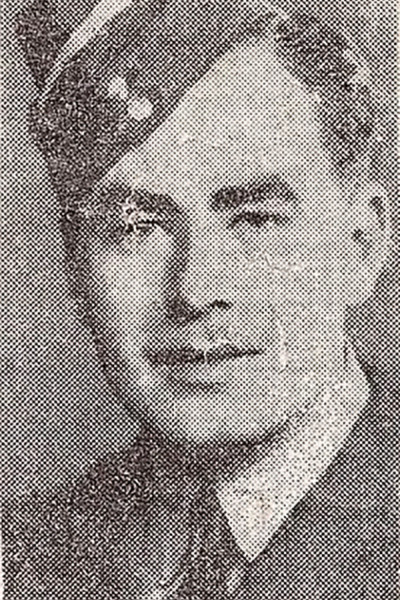

100 Squadron, based at RAF Waltham near Grimsby, took part in the ‘Battle of Berlin’ begun in November 1943 with massed bombing raids. On December 16, 498 planes took off in the sixth such raid to attack the main Anhalter Bahnhof, but in foggy weather. 28 planes, including Robert Mason’s Lancaster, were unable to land on their return from the raid in the very poor weather. He was killed in the crash landing on December 17, 1943, and is buried in Winchcombe Cemetery.
Robert Mason attended Cheltenham Grammar School, a keen sportsman, member of the cricket club and a member of the church choir. The family lived at Enfield. He joined the police before volunteering for the RAF in 1941. He was sent for training in America, and returned in January 1943 to join 100 Squadron, flying Lancasters on a number of raids. He had just been commissioned.
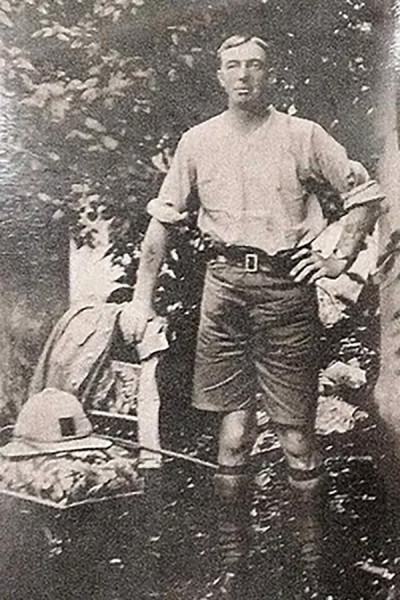
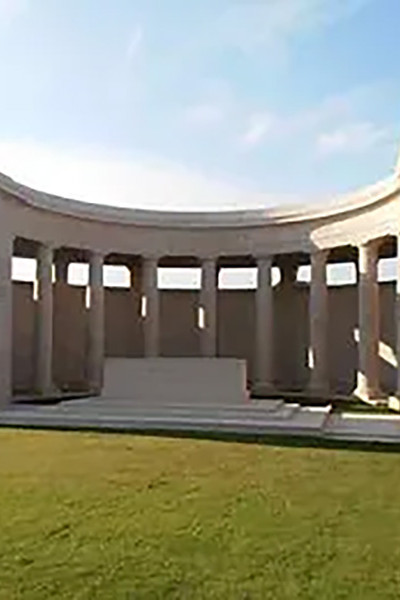
The Cambrai Memorial Louveral
Fred Major was one of the men for whom prayers were said in the service at the end of August 1914, leaving early in the war because he must have had previous military service. The battalion appears to gone to France only in 1916 when they fought at the Somme and then later at Cambrai. The battalion was in the trenches in November, then withdrawn briefly before before facing a German counter-atttack at La Vaquerie on November 30. Fred Major was killed in the fighting on Decemeber 1 1917. He is commemorated at the Cambrai Memorial at Louveral.
Fred Major’s family lived at Coates, and he worked as a labourer in the engineering department of the Great Western Railway.
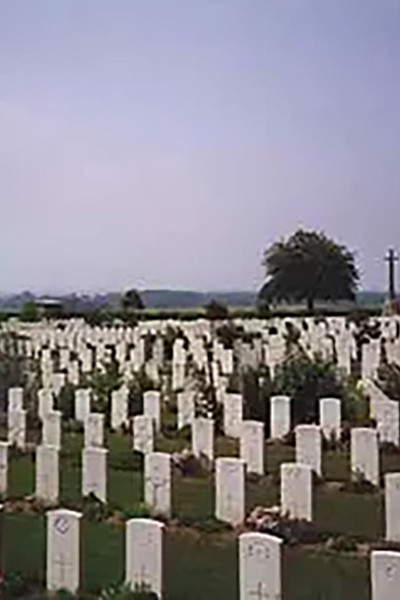
Tincourt Cemetery
Owen Smith enlisted in Winchcombe. The Oxfordshire and Buckinghamshire Light Infantry fought with the 20th Division at the Somme and the following year at Cambrai. Owen Smith died of wounds in the later part of the fighting there, on December 21, 1917 at the Casualty Clearing Station at Tincourt. He is buried in the cemetery at Tincourt.
Owen Smith was born in Guiting Power the youngest son of a labourer. His mother died before he was two, and when his father died when he was ten, he was admitted to Kingham Hill School. He came to Winchcombe where his older sister, Amy, and next of kin married in 1916. He enlisted in Winchcombe.
Thomas Blandford volunteered for 3/5 Territorial Gloucesters in August 1915, when he may have been under age, possibly with two older brothers. He was transferred to the 2/5 Battalion in July 1917, part of the operation near the Hindenburg Line. Thomas was reported missing on March 21, 1918. the first day of the Spring Offensive and found wounded and taken prisoner on March 25. He was discharged from the army in April 1919, as 50% disabled having lost an eye, and awarded a pension. He returned to his mother in Greet, but died in December 1919. He was 21.
He is not listed on the Commonwealth War Graves Commission.
Thomas was the youngest son in a large and disparate family. At 12 he was still at school but living at Blacksheds with other family members.