
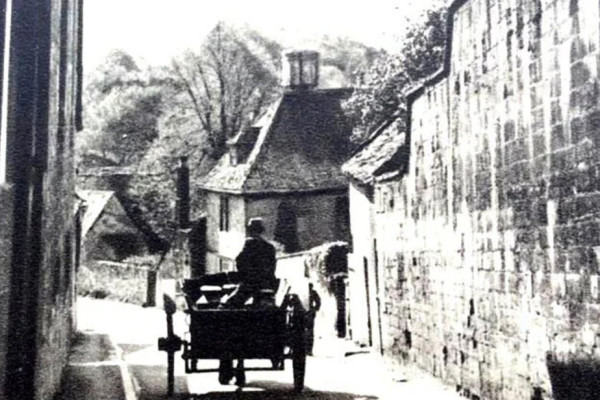
The answer is - from George Sexty’s Tannery down by the river Isbourne.
A tannery has to turn animal skins into leather. First they have to be soaked in water, then pounded and scoured to remove any flesh and fat. The muck all goes into the river, of course!
Then the skins are soaked in urine to loosen the hairs! Ugh! The hairs are scraped off by using scrapers like these. One is metal; one is slate, and one is glass. They were given to the museum when Thomas Hunt’s tannery at the foot of Vineyard Street closed.


They are being ‘bated’. Bating is a fermentative process which relies on enzymes produced by bacteria found in dung, preferably from dogs and chickens. The tanners did this to soften the leather.
Not surprisingly, tanneries were very smelly places (and the river was very polluted!) Silk Mill Lane (then known as Bleby’s Lane) was not the desirable residential area it is now!

After this preparation, the skins are ready for the tanning process which causes permanent chemical and physical changes to the raw animal skin.
After tanning, the skin does not decay, even after getting wet; it remains elastic and flexible, repels water and is stain resistant.
The tanning process took several weeks as the hides gradually absorbed and reacted with the tanning agent, bark from trees (usually oak), to form leather.
Tanneries provided leather for bellows, shoes and boots, saddlery, harness, tough gaiters for hedgers, as well as soft, pliable breeches for farmers.
Apparently, Winchcombe was famous for its leather breeches. They used to cost as much as a pair of boots because of the time it took to make the button-holes or straps, and it was necessary to have a good fit.
When George Sexty’s tannery closed in the 1930s, this bell was acquired as a keepsake by the Greening family. It was rung at 6:00 a.m., for the start of a day’s work, at noon for the lunch break, and again at 6:00 p.m. when the day’s work was done.
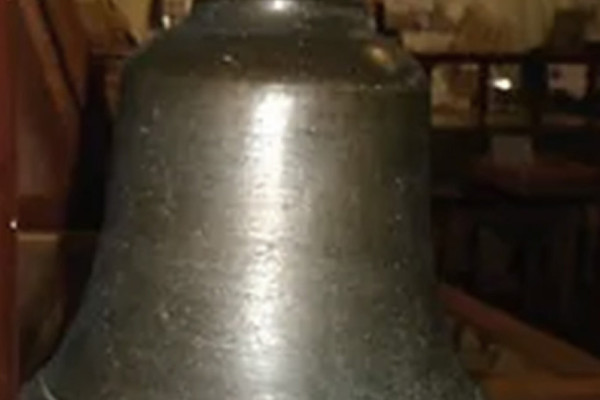
Nowadays, children enjoy the opportunity to ring the bell in the museum! According to Harold Greening, this bell was cast by a Sexty of another branch of the family, who lived in what is now Wesley House and whose foundry was opposite the tanyard in Silk Mill Lane.