
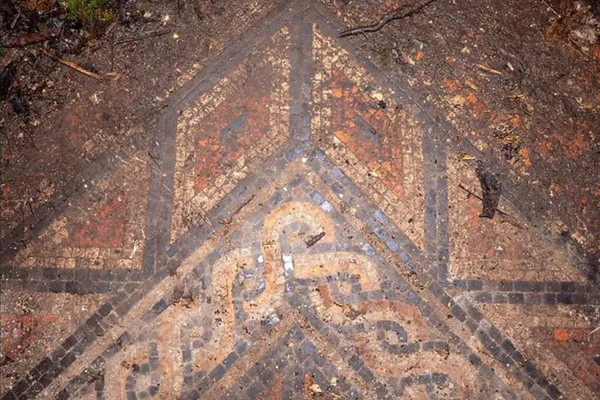
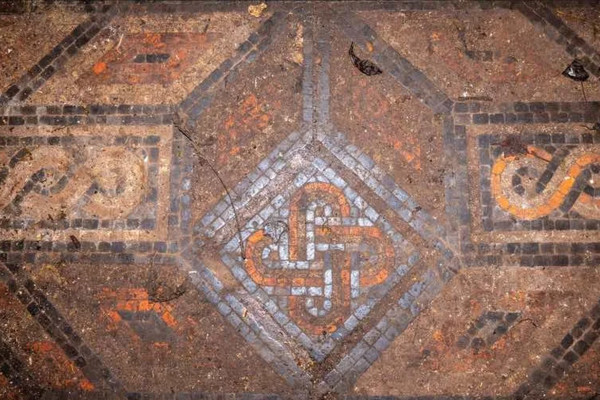
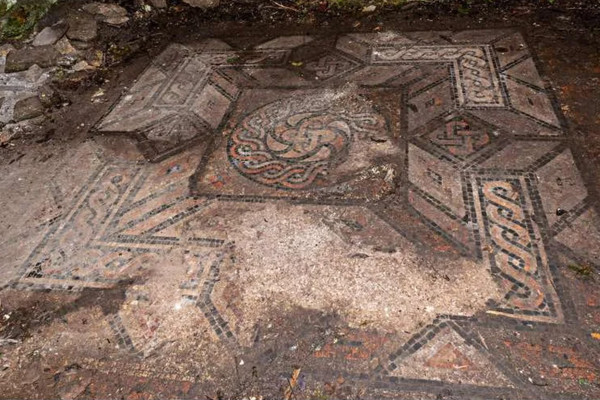
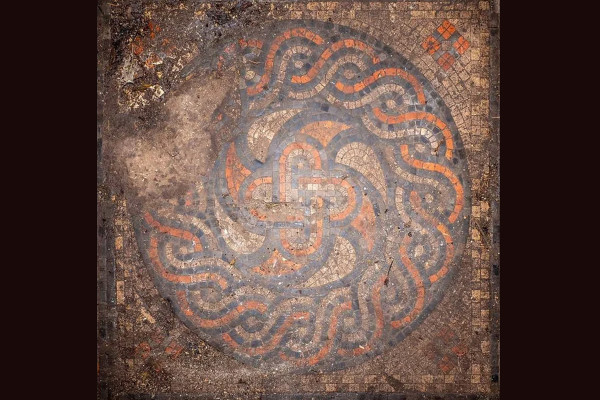
The one we can see is a Victorian mosaic, but, underneath the fields, lies a large Roman villa with beautiful mosaics, built about 2000 years ago. It was discovered in 1882 and the excavations were complete by 1889.
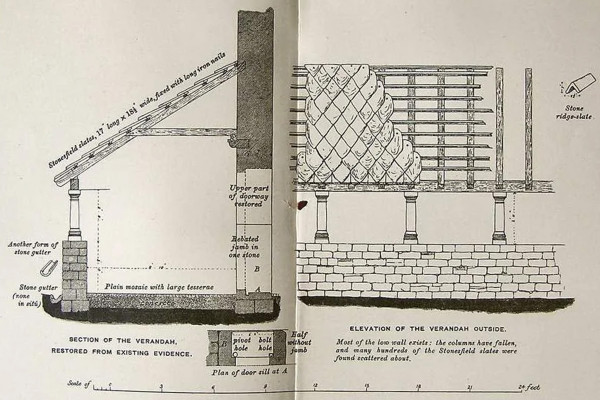
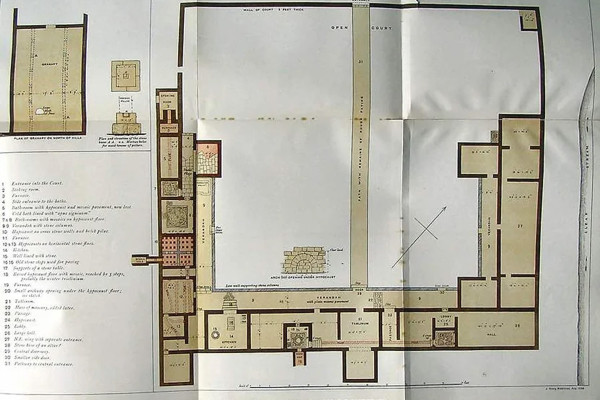
This architectural drawing was made showing the construction of the verandah
The villa covered roughly 52 metres by 60 metres.
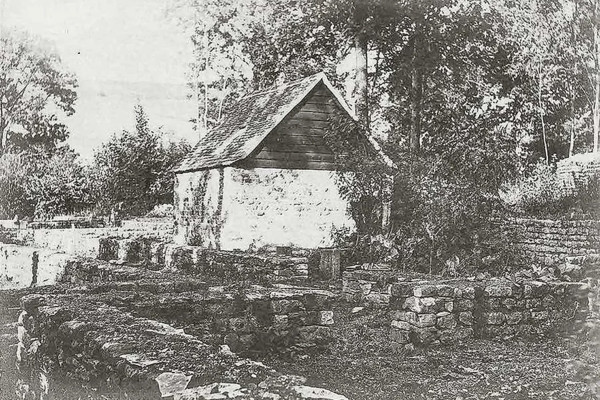
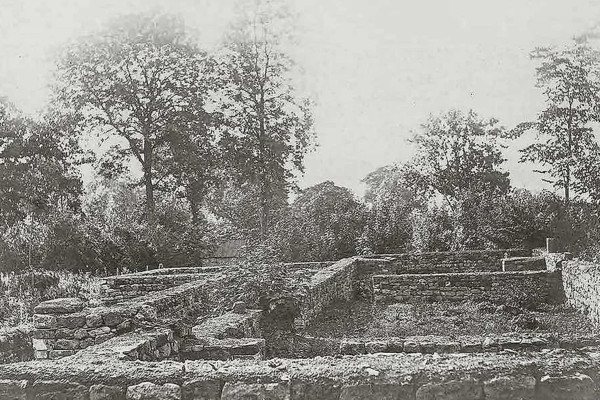
A number of photographs were taken of the excavations, before the site was covered up again to protect it:
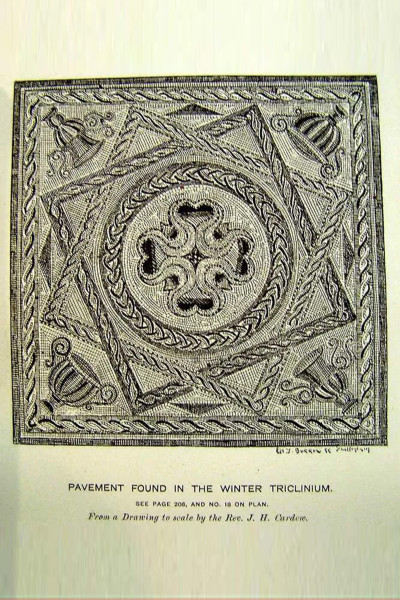
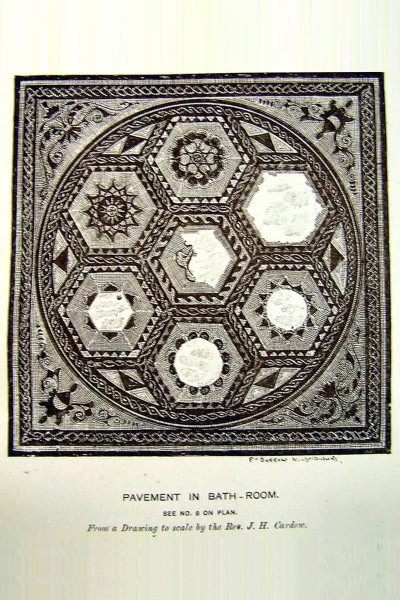
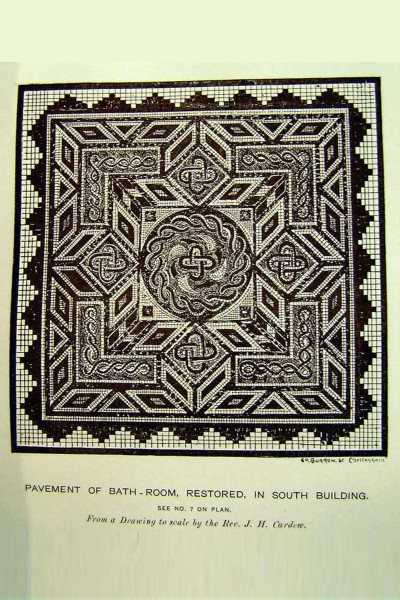
The Reverend J.H. Cardew made these meticulously detailed drawings of some of the intricate mosaic floors. They were probably laid by the school of mosaicists working in Corinium:
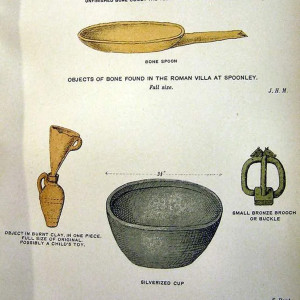
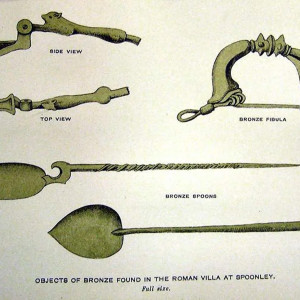
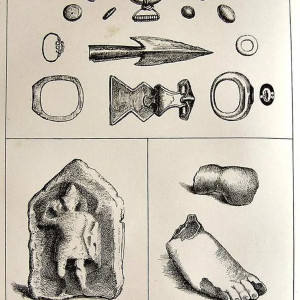
A number of artefacts were found which suggest that the villa owners enjoyed a remarkably sophisticated standard of living, perhaps lasting until the Romans left Britain in 410 A.D. They may have been wealthy Romano-British landowners, or possibly municipal administrators from Corinium who chose to live in the manner of independent farmers.

Nearly 20 years before Spoonley was discovered, another villa was excavated at Wadfield Farm. Emma Dent reported that “the tessellated pavement was as perfect as if just completed by the workmen; but its speedy removal was found to be absolutely necessary in order to preserve it from the Winchcombe public, who, in the space of one Sunday afternoon, carried off a large portion in small pieces, as souvenirs.”
The mosaic floor was placed safely in the greenhouse of Sudeley Castle, but, in 1896, Emma Dent had it returned to its original site:



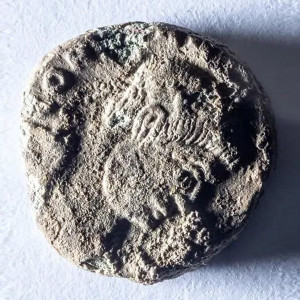
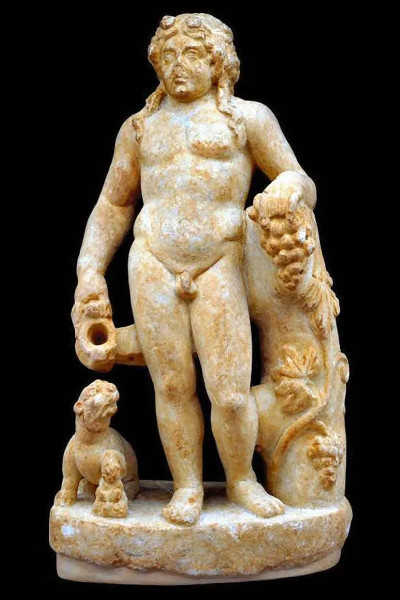
This marble statue, 42 centimetres high, depicting the Roman god Bacchus with his panther was found here It is now in the British Museum.

This man with a rake was part of a badly damaged floor, so Emma Dent had it taken up and framed. Its whereabouts now are unknown.